Chemical Peels in
Marietta & East Cobb
Medical-grade chemical peels to resurface sun-damaged skin, fade pigmentation, smooth texture, and restore a brighter, more even complexion – performed under the oversight of our board-certified dermatologists.
What Are Chemical Peels?
Chemical peels are controlled exfoliation treatments that use medical-grade acid solutions to remove damaged outer skin layers, revealing smoother, more evenly toned skin beneath. They are one of the most versatile and time-tested aesthetic procedures in dermatology.
By accelerating the natural shedding process, chemical peels address a wide range of concerns – from sun damage and hyperpigmentation to fine lines, acne scars, and dull, rough texture. The depth and type of peel is carefully selected based on your specific concerns, skin type, and tolerance.
At DESSNA, chemical peels are performed by our licensed aesthetician team under the oversight of our board-certified dermatologists – ensuring you receive a medically supervised treatment with the highest standard of safety and results.
What we offer
Superficial Peels (Light)
Gentle exfoliation using alpha hydroxy acids (glycolic, lactic) or beta hydroxy acids (salicylic) that target the outermost skin layer. Ideal for mild discoloration, rough texture, and acne-prone skin with minimal downtime.
Medium-Depth Peels
Trichloroacetic acid (TCA) or Jessner's solution penetrates into the upper dermis to address moderate sun damage, deeper pigmentation, fine lines, and acne scarring. Requires 5 to 7 days of peeling and recovery.
Combination Peels
Customized formulations that blend multiple acids at specific concentrations to address several concerns simultaneously. Tailored to your skin type, sensitivity, and treatment goals for the most effective single-session result.
Peel Series Protocols
A planned series of peels spaced 3 to 4 weeks apart delivers cumulative improvement in tone, texture, and clarity. Each session builds on the last, progressively refining skin quality with manageable recovery between treatments.
Why Your Skin Benefits from Chemical Peels
Chemical peels work by addressing the root causes of dull, uneven, and aging skin. Understanding the science helps us select the right peel for your specific concerns.
Cumulative Sun Damage
Years of UV exposure accelerate skin aging, causing uneven pigmentation, rough texture, and fine lines. Chemical peels remove these damaged layers and stimulate fresh, evenly toned skin growth from beneath.
Slowed Cell Turnover
As skin ages, the natural exfoliation cycle slows from roughly 28 days to 45+ days. Dead cells accumulate on the surface, creating a dull, rough complexion. Chemical peels reset this cycle for a brighter, smoother appearance.
Post-Inflammatory Pigmentation
After acne, eczema, or skin injuries, melanocytes can overproduce pigment, leaving dark marks. Chemical peels accelerate the turnover of pigmented cells while suppressing excess melanin production in the healing skin.
Collagen & Elastin Decline
Aging and environmental damage reduce collagen and elastin production. Medium-depth peels stimulate a wound-healing response that triggers new collagen synthesis, improving skin firmness, fine lines, and overall quality.
How We Perform Chemical Peels at DESSNA
We customize every chemical peel to your skin – selecting the right acid, concentration, and protocol to deliver visible results with predictable recovery.
Skin Analysis & Consultation
Your aesthetician performs a thorough skin analysis to assess your concerns, skin type, Fitzpatrick classification, and treatment history. We review your skincare routine, sun exposure habits, and any contraindications. A customized peel protocol is selected – including the appropriate acid type, concentration, and application time for your specific skin.
Chemical Peel Application
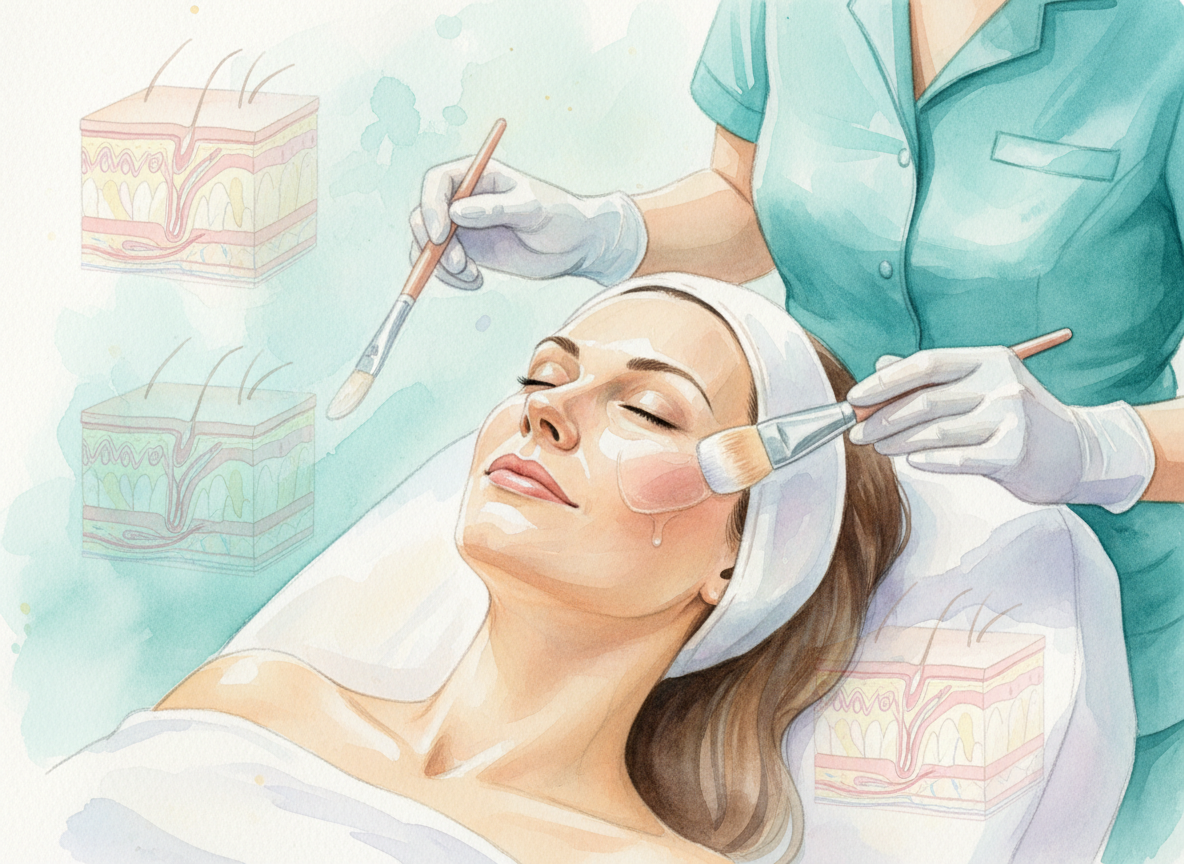
The skin is cleansed and prepped. The peel solution is applied evenly across the treatment area in controlled layers. You may feel mild tingling or warmth during application – this is normal and indicates the peel is working. Application time varies by peel type, typically 3 to 10 minutes for superficial peels and longer for medium-depth treatments.
Aftercare & Results Plan
After neutralization and removal, we apply soothing products and provide detailed aftercare instructions. Superficial peels may cause mild flaking for 2 to 3 days. Medium-depth peels involve more noticeable peeling over 5 to 7 days. We recommend a series of 3 to 6 treatments spaced 3 to 4 weeks apart for optimal, cumulative results.
Chemical Peel Options at Our Marietta Practice
Your peel protocol is customized to your skin type, concerns, and goals. Here are the approaches we use to restore a clear, radiant complexion.
Glycolic Acid Peel
The most popular superficial peel. Glycolic acid penetrates evenly to exfoliate dead cells, stimulate collagen, and brighten overall complexion. Minimal downtime with mild flaking for 1 to 2 days. Excellent as a maintenance treatment every 4 to 6 weeks.
Salicylic Acid Peel
A beta hydroxy acid peel that penetrates into oil-filled pores to dissolve debris, reduce inflammation, and prevent new breakouts. Ideal for patients with active acne, blackheads, and oily skin. Anti-inflammatory properties calm redness during and after treatment.
TCA Peel (Trichloroacetic Acid)
A medium-depth peel that penetrates into the upper dermis for more significant correction of sun damage, melasma, acne scars, and fine lines. Requires 5 to 7 days of peeling. Delivers dramatic improvement in skin tone and texture.
Lactic Acid Peel
A gentle alpha hydroxy acid peel derived from milk that exfoliates while simultaneously hydrating the skin. Ideal for patients with sensitive or dry skin who want brightening and smoothing without irritation. Minimal to no visible peeling.
Jessner's Peel
A combination peel blending salicylic acid, lactic acid, and resorcinol for enhanced penetration and effectiveness. Particularly effective for melasma and resistant hyperpigmentation. Can be applied in multiple layers for customizable depth.
Peel + Skincare Protocol
We pair chemical peels with a customized medical-grade skincare regimen – including retinoids, antioxidants, and broad-spectrum SPF – to protect results, accelerate improvement between sessions, and maximize the longevity of your outcome.
Med Spa vs. Dermatology Practice: What's the Difference?
Not all chemical peels are created equal. Here is what sets DESSNA's medical-grade peels apart from spa-level treatments:
Stronger, more effective formulations than OTC or spa peels
Board-certified supervision ensures safety for your skin type
Fitzpatrick typing and contraindication screening before every peel
Acid type, concentration, and layers tailored to your specific concerns
Peels coordinated with your medical dermatology treatment plan
Why Chemical Peels at a Dermatology Practice Matter
Safety Through Skin Type Expertise
Chemical peels carry real risks when applied incorrectly – including burns, scarring, and post-inflammatory hyperpigmentation, particularly in darker skin tones. At DESSNA, your aesthetician and supervising dermatologist assess your Fitzpatrick skin type, review your medication history, and select the safest, most effective peel for your specific skin.
Integrated Care for Complex Concerns
Patients with melasma, rosacea, or active acne require careful peel selection. The wrong peel can worsen these conditions. Our dermatologists coordinate peels with your medical treatment plan – using pre-treatment topicals when needed and selecting acids that complement rather than conflict with your existing regimen.
If you want smoother, brighter, more even-toned skin, a chemical peel consultation at DESSNA gives you both the aesthetic result and the medical expertise to do it safely – with results that build over time.
What Our Patients Say
“Doctor Edward Chen is the BEST! He's very professional, very caring, he will always give you his honest advice. He helped my son who had acne issues – his skin now looks great like never before.”
“Dr. Candace Green has a very warm bedside manner and makes you feel very comfortable! Great office, staff, and overall experience.”
“The office is well run and Dr. Green is thorough.”
Chemical Peel FAQs
Answers to the questions our Marietta and East Cobb patients ask most about chemical peels.
Most patients describe a mild tingling, warmth, or slight stinging sensation during application that subsides quickly. Superficial peels are very well tolerated. Medium-depth peels (TCA) may cause more noticeable stinging, but the sensation is brief. We monitor your comfort throughout and can adjust the protocol if needed.
Ready for Smoother, Brighter Skin in Marietta or East Cobb?
Your first step is a chemical peel consultation with our aesthetician team. We will assess your skin concerns, determine the right peel type and depth, and create a personalized treatment plan to restore your most radiant complexion.
Most patients see visible improvement after their very first peel session.
Related Treatments & Services
Explore other aesthetic and skin rejuvenation treatments we offer at our Marietta practice