
Skin Discoloration Treatment in
Marietta & East Cobb
Board-certified dermatology care for hyperpigmentation, hypopigmentation, and uneven skin tone – accurate diagnosis and personalized treatment to restore your skin's natural clarity.
What Is Skin Discoloration?
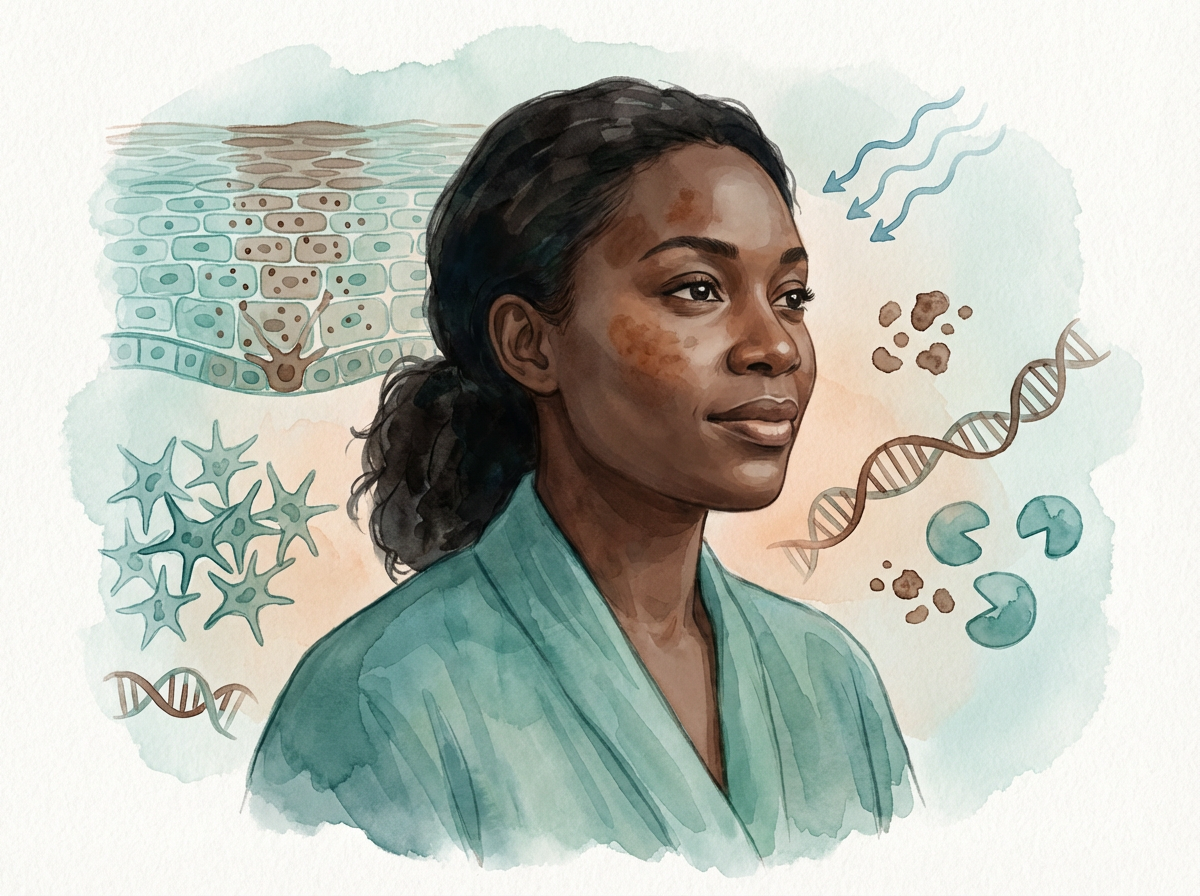
Skin discoloration refers to any change in your natural skin tone – whether darker patches, lighter spots, or uneven color distribution. It occurs when melanocytes, the cells responsible for producing melanin, become overactive, underactive, or damaged.
While often harmless, skin discoloration can signal underlying conditions, hormonal imbalances, or cumulative sun damage. It can also significantly affect self-confidence and quality of life, especially when it appears on visible areas like the face, neck, and hands.
At DESSNA, we use advanced diagnostic tools to identify the type and cause of your discoloration, then create a targeted treatment plan to restore even, healthy-looking skin tone.
Not all discoloration is the same
Hyperpigmentation
Darkened patches caused by excess melanin production. Includes melasma, sun spots, and post-inflammatory hyperpigmentation. Common after sun exposure, hormonal changes, or skin injury.
Hypopigmentation
Lightened areas where melanin production is reduced or absent. Includes vitiligo, pityriasis alba, and post-inflammatory hypopigmentation. May result from autoimmune conditions or skin damage.
Post-Inflammatory Changes
Discoloration that develops after acne, eczema, burns, or other skin injuries. Can appear as dark or light marks and may persist for months without treatment. More common in darker skin tones.
Sun-Related Discoloration
Cumulative UV damage causes uneven pigmentation, solar lentigines (sun spots), and mottled skin tone. Often appears on the face, hands, chest, and arms after years of sun exposure.
Why Skin Discoloration Develops
Discoloration results from disruptions in melanin production. Understanding the underlying cause is essential for choosing the right treatment approach.
UV Exposure & Sun Damage
Ultraviolet radiation stimulates melanocytes to produce excess melanin as a protective response. Cumulative sun exposure leads to solar lentigines, uneven tone, and accelerated photoaging – especially on the face, hands, and chest.
Hormonal Changes
Estrogen and progesterone fluctuations during pregnancy, oral contraceptive use, or hormone therapy can trigger melasma – symmetrical dark patches on the cheeks, forehead, and upper lip that worsen with sun exposure.
Post-Inflammatory Response
After acne, eczema, burns, or other skin injuries, the healing process can leave behind dark or light marks. Melanocytes may overproduce or underproduce pigment during repair, particularly in darker skin tones.
Autoimmune & Genetic Factors
Conditions like vitiligo involve the immune system attacking melanocytes, causing white patches. Genetic predisposition also influences susceptibility to melasma, freckling patterns, and overall pigmentation response.
How We Treat Skin Discoloration at DESSNA
We identify the cause of your discoloration and use advanced treatments to restore even, radiant skin tone.
Comprehensive Assessment
We identify the type of discoloration (hyperpigmentation, hypopigmentation, redness, or uneven tone) and its underlying cause. This determines which treatments will be most effective for your specific concern.
Targeted Treatment
We use advanced lasers, chemical peels, topical treatments, or combination therapy to address your specific discoloration. Each treatment is customized to your skin type and concern.
Maintenance & Prevention
We provide ongoing care and prevention strategies to maintain results and prevent recurrence. Sun protection and proper skincare are essential for long-term success.
Skin Discoloration Treatment Options at Our Marietta Practice
We offer multiple treatment options to address your specific type of discoloration and restore even, radiant skin tone.
Laser Skin Resurfacing
Advanced laser technology targets pigmented areas and stimulates collagen remodeling. Multiple sessions create even, radiant skin tone with minimal downtime.
Chemical Peels
Customized chemical peels remove discolored skin layers and promote new, even-toned skin growth. We tailor strength to your skin type and concern.
Topical Depigmenting Agents
Prescription-strength topicals like hydroquinone, tretinoin, and combination formulas reduce pigmentation and even skin tone. Best for maintenance after laser or peel treatments.
IPL Photofacial
Intense pulsed light therapy reduces redness and evens skin tone. Ideal for patients with vascular discoloration or post-inflammatory redness.
Sun Protection & Prevention
Daily SPF 30+ is critical to prevent new discoloration and protect treated skin. We recommend a comprehensive sun safety plan tailored to your skin type.
Maintenance Skincare Plan
We provide a customized skincare routine with brightening serums, retinoids, and antioxidants to maintain results and prevent recurrence of discoloration.
When Discoloration Signals Something More
While most skin discoloration is cosmetic, certain changes warrant prompt evaluation:
Dark spots that grow, change shape, or develop irregular borders
Uneven discoloration that doesn't match typical melasma or sun damage patterns
Discoloration accompanied by itching, scaling, bleeding, or pain
Progressive lightening that may indicate vitiligo or other autoimmune conditions
Why Professional Evaluation Is Essential
Skin Type Matters
Treatment that works for one skin type can worsen discoloration in another. Darker skin tones are more prone to post-inflammatory hyperpigmentation and require careful treatment selection. A dermatologist ensures your treatment is safe and effective for your specific skin type and tone.
Over-the-Counter Products Often Fall Short
Many OTC brightening products contain low concentrations of active ingredients or potentially harmful bleaching agents. Medical-grade treatments prescribed by a dermatologist are more effective, safer, and targeted to the specific type of discoloration you have.
If you have skin discoloration that concerns you – whether cosmetic or potentially medical – a dermatologist evaluation is the safest first step and it takes just minutes.
What Our Patients Say
“Doctor Edward Chen is the BEST! He's very professional, very caring, he will always give you his honest advice. He helped my son who had acne issues – his skin now looks great like never before.”
“Dr. Candace Green has a very warm bedside manner and makes you feel very comfortable! Great office, staff, and overall experience.”
“The office is well run and Dr. Green is thorough.”
Skin Discoloration Treatment FAQs
Answers to the questions our Marietta and East Cobb patients ask most about skin discoloration care.
Dark spots on the face are most commonly caused by sun exposure (solar lentigines), hormonal changes (melasma), or post-inflammatory hyperpigmentation from acne or skin injuries. UV radiation stimulates melanocytes to produce excess melanin, which accumulates in patches. A dermatologist can determine the specific cause and recommend targeted treatment.
Ready for Clearer, More Even Skin in Marietta or East Cobb?
Your first step is a comprehensive skin analysis with one of our board-certified dermatologists. We will identify the type and cause of your discoloration and create a personalized treatment plan to restore your skin's natural clarity.
Most patients see visible improvement within 4 – 8 weeks of starting a targeted treatment plan.
Related Conditions & Services
Explore other pigmentation and skin tone conditions we treat at our Marietta practice