Rosacea Treatment in
Marietta & East Cobb
Board-certified dermatology care for facial redness, flushing, visible blood vessels, and inflammatory rosacea – with personalized treatment plans that calm your skin and restore confidence.
What Is Rosacea?
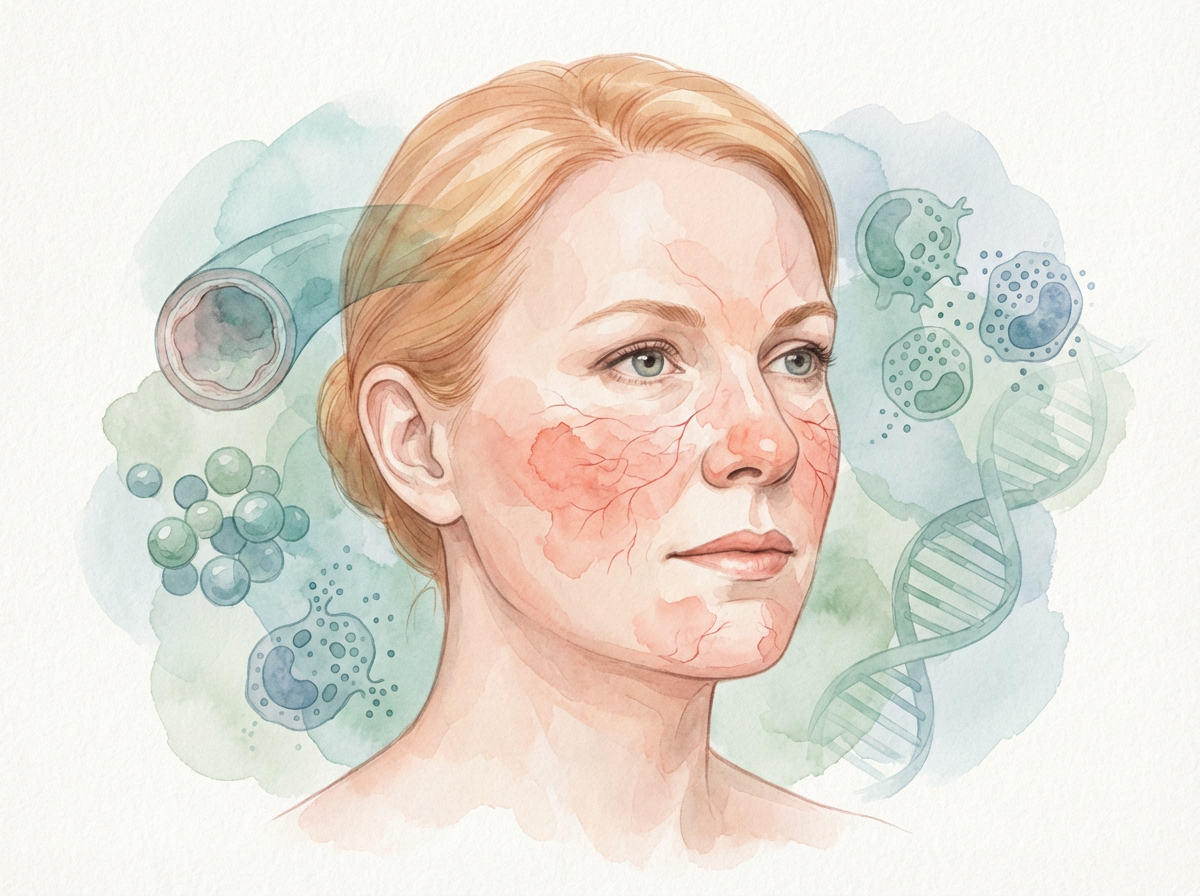
Rosacea is a chronic inflammatory skin condition that primarily affects the central face – cheeks, nose, chin, and forehead. It affects an estimated 16 million Americans, most commonly fair-skinned women between the ages of 30 and 60, often with Celtic or Northern European ancestry.
While rosacea is sometimes mistaken for acne, sunburn, or simply "sensitive skin," it is a distinct medical condition with a progressive course. Without treatment, rosacea typically worsens over time – episodes of flushing become more frequent, redness becomes persistent, and visible blood vessels and inflammatory bumps may develop.
At DESSNA, we identify your specific rosacea subtype and triggers to build a treatment plan that reduces flares, calms inflammation, and protects your skin long-term – because managing rosacea effectively starts with understanding exactly what's driving it.
Rosacea has four recognized subtypes
Erythematotelangiectatic Rosacea (ETR)
Persistent central facial redness, flushing episodes, and visible blood vessels (telangiectasia). The most common subtype, often the first to appear.
Papulopustular Rosacea
Acne-like bumps and pustules on a background of facial redness. Often misdiagnosed as adult acne, but requires a different treatment approach.
Phymatous Rosacea
Skin thickening and enlargement, most commonly on the nose (rhinophyma). Develops gradually over time and is more common in men.
Ocular Rosacea
Eye involvement including dryness, irritation, bloodshot appearance, and swollen eyelids. Can occur with or without skin symptoms and requires coordinated care.
Why Rosacea Happens
Rosacea is a complex condition driven by multiple interacting factors. Understanding these mechanisms helps us target treatment more precisely and reduce flare frequency.
Vascular Dysfunction
Abnormal blood vessel regulation causes the facial flushing and persistent redness characteristic of rosacea. Over time, these dilated vessels become permanently visible as telangiectasia on the cheeks and nose.
Demodex Mites & Microbiome
Elevated levels of Demodex folliculorum mites and disruptions in the skin's microbial balance trigger inflammatory responses. The immune reaction to these organisms drives much of the bumps and pustules seen in rosacea.
Immune System Dysregulation
Overactive innate immune pathways – particularly involving cathelicidin peptides – produce exaggerated inflammatory responses to stimuli that wouldn't affect normal skin, perpetuating the cycle of redness and irritation.
Genetics & Environmental Triggers
Family history significantly increases rosacea risk, especially in those with fair skin and Celtic or Northern European heritage. Sun exposure, heat, alcohol, spicy foods, and stress are common environmental triggers that provoke flares.
How We Treat Rosacea at DESSNA
We combine advanced laser technology, prescription treatments, and personalized trigger management to reduce redness and restore your skin's natural appearance.
Clinical Assessment
We evaluate your rosacea subtype, severity, and triggers. This helps us determine whether you need laser therapy, topical treatments, oral medications, or a combination approach tailored to your specific presentation.
Customized Treatment Plan
Based on your assessment, we recommend laser therapy, prescription topicals, oral antibiotics, or combination therapy. Each plan is designed to reduce redness, calm inflammation, and prevent flare-ups.
Trigger Management & Prevention
We identify your personal triggers (heat, spicy foods, stress, sun) and develop strategies to minimize exposure. Ongoing skincare guidance and maintenance treatments keep rosacea under control long-term.
Rosacea Treatment Options at Our Marietta Practice
Your treatment plan is customized to your rosacea subtype, triggers, and goals. Here are the tools we use to reduce redness and prevent flare-ups.
Laser Rosacea Treatment
Advanced laser technology targets dilated blood vessels and reduces persistent facial redness. Treatments are quick, minimally invasive, and show visible improvement in redness and flushing within weeks.
Topical Anti-Inflammatory Creams
Prescription-strength topicals reduce inflammation, redness, and sensitivity. Applied daily, they calm the skin and prevent flare-ups while improving texture and appearance.
Oral Antibiotics
Low-dose oral antibiotics (like doxycycline) reduce inflammation and bacterial overgrowth. They're particularly effective for rosacea with bumps or pustules and work best as part of a comprehensive plan.
Trigger Identification & Avoidance
We help you identify personal triggers (heat, spicy foods, alcohol, stress, sun) and develop strategies to minimize exposure. This is foundational to long-term control.
Sun Protection & Barrier Care
Daily SPF 30+ protection and gentle, fragrance-free skincare prevent flare-ups and protect sensitive skin. We recommend specific products that won't irritate rosacea-prone skin.
Lifestyle & Stress Management
Stress reduction techniques, adequate sleep, and lifestyle modifications strengthen your skin's resilience. Combined with medical treatment, these strategies significantly reduce flare frequency.
Signs Your Rosacea Needs Professional Care
Rosacea is a progressive condition. These signs indicate it's time to see a dermatologist before permanent changes develop:
Flushing that no longer fades or becomes constant
Fine red or purple lines (telangiectasia) appearing on cheeks or nose
Acne-like bumps or pustules that don't respond to acne treatments
Dryness, irritation, redness, or styes affecting the eyes (ocular rosacea)
Why Early Rosacea Treatment Matters
Persistent Redness & Telangiectasia
What begins as occasional flushing can progress to permanent redness and visible blood vessels that no longer resolve on their own. Once telangiectasia develops, laser or IPL treatment is typically needed to reduce their appearance.
Skin Thickening & Rhinophyma
In advanced cases, chronic inflammation can lead to tissue overgrowth and skin thickening – most notably rhinophyma (bulbous nose). This is far easier to prevent with early treatment than to correct surgically once established.
Rosacea is a progressive condition – the earlier you begin treatment, the more effectively we can control symptoms, prevent permanent vascular changes, and protect your skin from long-term damage.
What Our Patients Say
“Doctor Edward Chen is the BEST! He's very professional, very caring, he will always give you his honest advice. He helped my son who had acne issues – his skin now looks great like never before.”
“Dr. Candace Green has a very warm bedside manner and makes you feel very comfortable! Great office, staff, and overall experience.”
“The office is well run and Dr. Green is thorough.”
Rosacea Treatment FAQs
Answers to the questions our Marietta and East Cobb patients ask most about rosacea care.
Rosacea involves persistent or recurring facial redness, visible blood vessels, and often inflammatory bumps – particularly on the cheeks, nose, chin, and forehead. Sensitive skin may react to products but doesn't typically produce the progressive redness and vascular changes seen in rosacea. A dermatologist can distinguish between the two and recommend the right treatment approach.
Ready to Take Control of Your Rosacea in Marietta or East Cobb?
Your first step is a consultation with one of our board-certified dermatologists. We'll identify your rosacea subtype, map your triggers, and build a treatment plan that calms your skin and keeps it controlled.
Most patients see visible improvement within 4 – 8 weeks of starting treatment.
Related Conditions & Services
Explore other facial skin conditions we treat at our Marietta practice