
Psoriasis Treatment in
Marietta & East Cobb
Board-certified dermatology care for plaque psoriasis, guttate psoriasis, and all forms of this autoimmune condition – with advanced treatment options from topicals to biologics for lasting clearance.
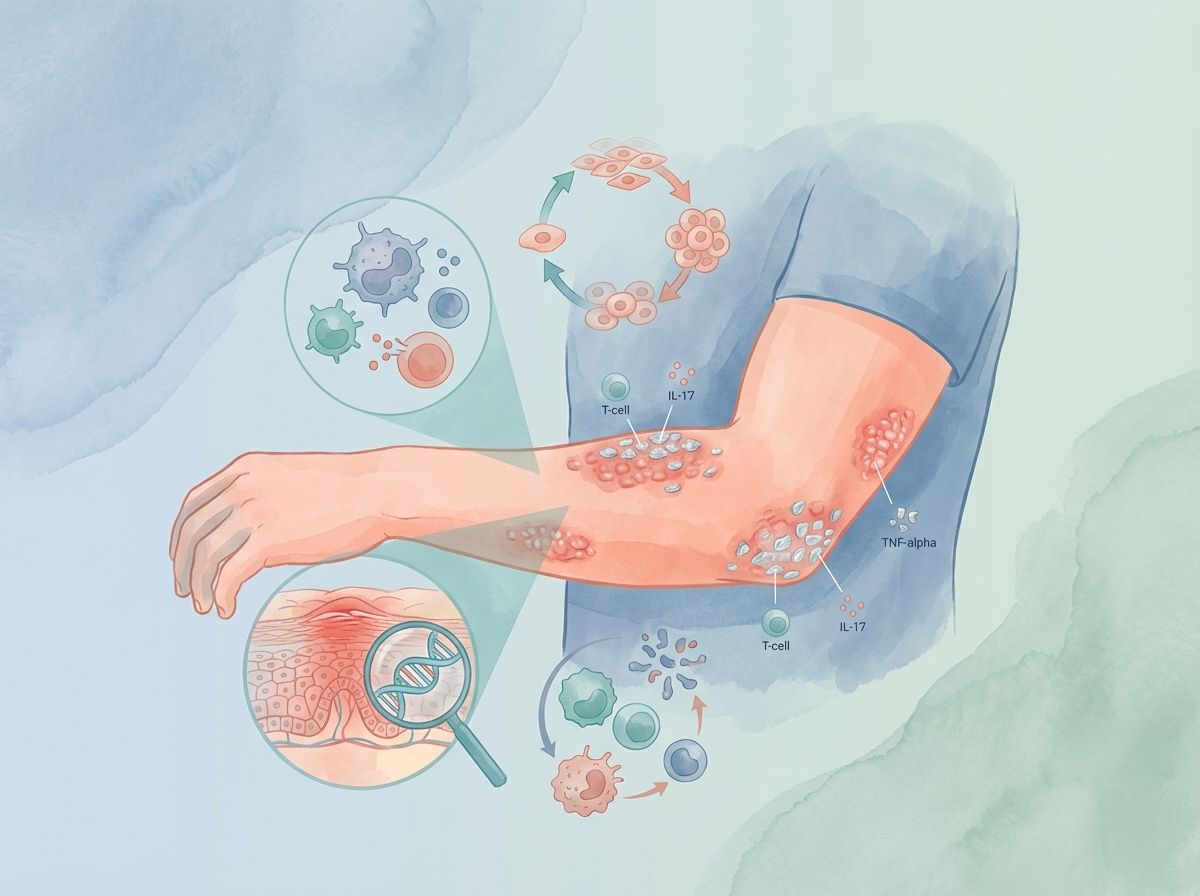
What Is Psoriasis?
Psoriasis is a chronic autoimmune condition that causes the immune system to mistakenly attack healthy skin cells, accelerating their growth cycle from the normal 28 – 30 days to just 3 – 4 days. This rapid turnover causes cells to pile up on the skin's surface, forming the characteristic thick, scaly plaques.
Affecting over 8 million Americans, psoriasis is not just a skin condition – it is a systemic inflammatory disease. Up to 30% of patients develop psoriatic arthritis, and psoriasis is associated with increased risk of cardiovascular disease, metabolic syndrome, and depression. This makes comprehensive management essential.
At DESSNA, we treat psoriasis as the systemic condition it is – addressing skin clearance, joint health screening, comorbidity monitoring, and quality of life with a personalized, evidence-based approach.
Types of psoriasis we treat
Plaque Psoriasis
The most common form, affecting about 80% of psoriasis patients. Presents as raised, red patches covered with thick, silvery-white scales. Typically appears on the elbows, knees, scalp, and lower back, but can develop anywhere on the body.
Guttate Psoriasis
Small, drop-shaped lesions that appear suddenly, often triggered by a streptococcal throat infection. More common in children and young adults. May resolve on its own or develop into chronic plaque psoriasis over time.
Inverse Psoriasis
Smooth, red, inflamed patches that develop in skin folds – armpits, groin, under breasts, and between buttocks. Unlike plaque psoriasis, these lesions lack the typical silvery scales and can be mistaken for fungal infections or intertrigo.
Nail & Scalp Psoriasis
Psoriasis frequently affects the nails (causing pitting, discoloration, crumbling, and separation from the nail bed) and the scalp (causing thick, scaly plaques that extend beyond the hairline). Both require targeted treatment approaches distinct from body psoriasis.
Why Psoriasis Develops
Psoriasis results from a complex interplay between genetic susceptibility, immune system dysfunction, and environmental triggers. Understanding the underlying mechanisms guides more effective, targeted treatment.
Immune System Dysfunction
In psoriasis, T-cells (a type of white blood cell) mistakenly attack healthy skin cells. This triggers an inflammatory cascade involving cytokines like TNF-alpha, IL-17, and IL-23 that accelerate skin cell production and sustain chronic inflammation.
Genetic Predisposition
Psoriasis has a strong genetic component – about 40% of patients have a family member with the condition. Multiple genes (including HLA-Cw6) influence susceptibility, but genetics alone don't cause psoriasis. Environmental triggers activate the disease in genetically predisposed individuals.
Environmental Triggers
Stress, infections (especially strep throat), skin injuries (Koebner phenomenon), certain medications (lithium, beta-blockers, antimalarials), cold weather, and heavy alcohol use can all trigger or worsen psoriasis flares in susceptible individuals.
Systemic Inflammation
Psoriasis is increasingly understood as a systemic inflammatory disease, not just a skin condition. The same inflammatory pathways that drive skin plaques also contribute to increased risk of cardiovascular disease, metabolic syndrome, and psoriatic arthritis.
How We Treat Psoriasis at Our Marietta Practice
We treat psoriasis as the systemic condition it is – targeting the immune dysfunction that drives it, not just managing surface symptoms. Our goal is clear or near-clear skin with minimal side effects.
Comprehensive Psoriasis Evaluation
Your dermatologist performs a thorough skin examination, assesses disease severity using standardized tools (PASI, BSA), evaluates nail and scalp involvement, and screens for psoriatic arthritis symptoms. We review your medical history, family history, and previous treatments to build a complete clinical picture.
Targeted Treatment Strategy
Based on your severity, affected areas, and treatment history, we build a personalized plan. Mild-to-moderate psoriasis may respond to topical therapies and phototherapy. Moderate-to-severe disease often requires systemic treatments – including biologics that target the specific immune pathways driving your psoriasis.
Ongoing Management & Monitoring
Psoriasis is a lifelong condition that requires ongoing care. We monitor treatment response, adjust therapies as needed, screen for comorbidities (cardiovascular risk, metabolic syndrome, psoriatic arthritis), and work with you to maintain clearance while minimizing side effects long-term.
Psoriasis Treatment Options at Our Marietta Practice
Today's psoriasis treatments are more effective than ever. Your plan is tailored to your disease severity, affected areas, joint involvement, and treatment goals – with the aim of clear or near-clear skin.
Topical Therapies
Prescription-strength corticosteroids, vitamin D analogues (calcipotriene), retinoids (tazarotene), and calcineurin inhibitors for sensitive areas. We match potency and formulation to the location and severity of your plaques, with clear protocols for safe long-term use.
Phototherapy (Light Therapy)
Narrowband UVB phototherapy delivered in-office 2 – 3 times per week. UV light slows the rapid skin cell turnover and reduces inflammation. Effective for patients who need more than topicals but prefer to avoid systemic medications, or as a complement to other treatments.
Biologic Therapy
Targeted biologic medications (including IL-17 inhibitors like secukinumab and ixekizumab, IL-23 inhibitors like guselkumab and risankizumab, and TNF inhibitors) that block the specific immune pathways driving psoriasis. Many patients achieve 90 – 100% skin clearance with biologics.
Oral Systemic Medications
Oral medications including methotrexate, apremilast (Otezla), and cyclosporine that work systemically to reduce immune overactivity. We monitor lab work regularly and select the agent best suited to your disease pattern, comorbidities, and lifestyle.
Scalp & Nail Psoriasis Treatment
Specialized treatment protocols for scalp psoriasis (medicated shampoos, topical solutions, intralesional injections) and nail psoriasis (topical treatments, intralesional steroids, systemic therapy for severe cases). These areas require targeted approaches distinct from body psoriasis.
Combination & Maintenance Therapy
For optimal results, we often combine treatments strategically – topicals with phototherapy, or biologics with targeted topicals for residual plaques. Maintenance protocols are designed to sustain clearance while minimizing medication exposure over time.
Psoriatic Arthritis Risk
Up to 30% of psoriasis patients develop psoriatic arthritis. Early detection is critical to prevent permanent joint damage:
Immune system attacks skin cells, causing plaques
Inflammatory cytokines circulate throughout the body
Same immune pathways begin attacking joint tissue
Without treatment, joints can suffer irreversible erosion
Biologics can protect both skin and joints simultaneously
Why Psoriasis Requires Comprehensive Care
Psoriasis vs. Eczema
While both cause red, inflamed skin, psoriasis produces thick, well-defined plaques with silvery scales, while eczema tends to cause thinner, more diffuse patches with intense itching. The immune pathways are fundamentally different – psoriasis is driven by IL-17/IL-23, while eczema involves IL-4/IL-13. Accurate diagnosis ensures the right treatment approach.
Cardiovascular & Metabolic Risk
Psoriasis patients have a significantly elevated risk of heart disease, stroke, diabetes, and metabolic syndrome due to chronic systemic inflammation. Effective psoriasis treatment – particularly with biologics – may help reduce this cardiovascular risk. We monitor these comorbidities as part of comprehensive psoriasis care.
If you have been managing psoriasis with over-the-counter products or outdated treatments, a dermatologist evaluation can open the door to modern therapies – including biologics – that can achieve 90 – 100% skin clearance for many patients.
What Our Patients Say
“Doctor Edward Chen is the BEST! He's very professional, very caring, he will always give you his honest advice. He helped my son who had acne issues – his skin now looks great like never before.”
“Dr. Candace Green has a very warm bedside manner and makes you feel very comfortable! Great office, staff, and overall experience.”
“The office is well run and Dr. Green is thorough.”
Psoriasis Treatment FAQs
Answers to the questions our Marietta and East Cobb patients ask most about psoriasis care.
There is currently no cure for psoriasis, but modern treatments can achieve remarkable results. Many patients on biologic therapy achieve 90 – 100% skin clearance (PASI 90/100). The goal of treatment is to minimize active disease, prevent flares, protect joints, and maintain quality of life long-term.
Ready for Clearer Skin in Marietta or East Cobb?
Your first step is a comprehensive psoriasis evaluation with one of our board-certified dermatologists. We will assess your disease severity, screen for joint involvement, and build a personalized treatment plan – from topicals to biologics – designed to achieve the clearest skin possible.
Many patients on modern biologic therapy achieve 90 – 100% skin clearance within 12 – 16 weeks.
Related Conditions & Services
Explore other autoimmune and inflammatory skin conditions we treat at our Marietta practice