
Vitiligo Treatment in
Marietta & East Cobb
Board-certified dermatology care for vitiligo – with personalized repigmentation strategies, advanced phototherapy, and compassionate support built around your skin and your goals.
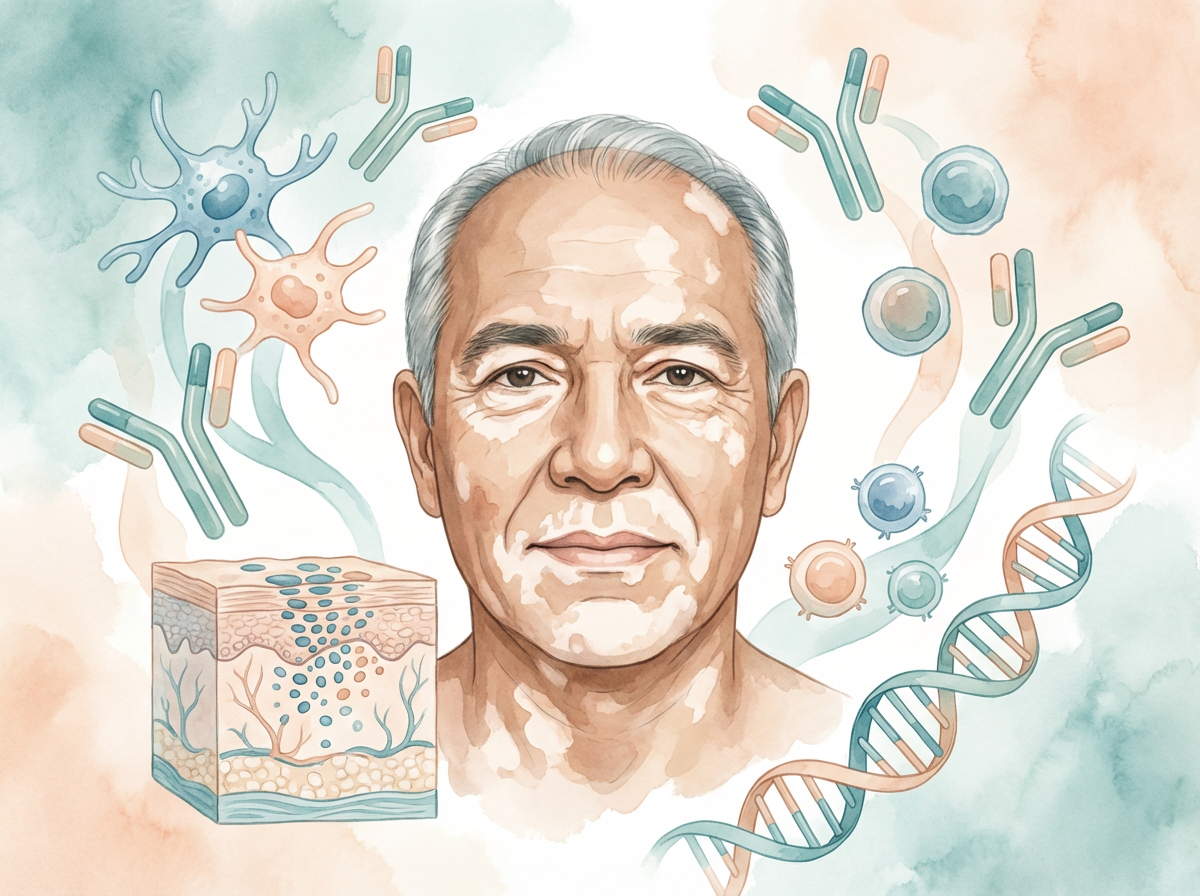
What Is Vitiligo?
Vitiligo is a chronic autoimmune condition in which the body's immune system attacks melanocytes – the cells responsible for producing skin pigment. This results in smooth, well-defined white patches that can appear anywhere on the body. It affects approximately 0.5 – 2% of the global population across all skin types.
While vitiligo is not physically painful or contagious, it can have a profound impact on self-esteem and quality of life. Research shows that vitiligo is more frequently diagnosed in individuals of Asian American and Hispanic/Latino descent, with a higher prevalence in older adults aged 60 and above.
At DESSNA, we approach vitiligo as the complex autoimmune condition it is – because effective treatment starts with understanding your specific pattern, progression rate, and the science behind repigmentation.
Vitiligo presents in several forms
Non-Segmental Vitiligo
The most common form, presenting as symmetrical white patches on both sides of the body – often on the face, hands, elbows, knees, and feet.
Segmental Vitiligo
Affects only one side or segment of the body, typically appearing earlier in life. It tends to progress for a period and then stabilize.
Acrofacial Vitiligo
Depigmentation concentrated on the fingers, toes, and facial areas – particularly around the eyes, nose, and mouth.
Universal Vitiligo
Extensive depigmentation covering most of the body's surface. This advanced presentation requires comprehensive management and long-term care.
Why Vitiligo Happens
Vitiligo is a multifactorial condition. Understanding the interplay of immune, genetic, and environmental factors helps us build a treatment plan that targets your specific triggers and progression pattern.
Autoimmune Attack on Melanocytes
The immune system mistakenly identifies melanocytes as foreign invaders and destroys them. This autoimmune response is the primary driver of vitiligo, and it's why the condition is often associated with other autoimmune disorders.
Oxidative Stress
An imbalance of reactive oxygen species in the skin can damage melanocytes and accelerate their destruction. Elevated hydrogen peroxide levels in vitiligo-affected skin disrupt normal pigment production pathways.
Neurogenic Factors
Nerve endings in the skin may release substances that are toxic to melanocytes. This mechanism is particularly relevant in segmental vitiligo, which follows nerve distribution patterns on one side of the body.
Genetics & Environmental Triggers
Over 50 genes have been linked to vitiligo susceptibility. Environmental triggers – including sunburn, chemical exposure, emotional stress, and skin trauma (Koebner phenomenon) – can activate the condition in genetically predisposed individuals.
How We Treat Vitiligo at DESSNA
We combine medical treatments with psychological support to slow progression, restore pigmentation, and improve your quality of life.
Comprehensive Evaluation
We assess your vitiligo extent, progression rate, and impact on your quality of life. We also check for associated conditions and discuss your treatment goals.
Customized Treatment Plan
We combine topical steroids, calcineurin inhibitors, phototherapy, and newer treatments like JAK inhibitors to slow progression and restore pigmentation.
Long-Term Management & Support
Vitiligo requires ongoing management. We monitor progression, adjust treatments as needed, and provide psychological support and camouflage options.
Vitiligo Treatment Options at Our Marietta Practice
We offer multiple treatment options to slow progression and promote repigmentation. Each plan is customized to your vitiligo extent and goals.
Topical Corticosteroids
Prescription-strength topical steroids slow depigmentation and may promote repigmentation, especially on the face and trunk. Most effective when started early.
Calcineurin Inhibitors
Non-steroidal topical medications that suppress immune activity and promote repigmentation. Ideal for sensitive areas like the face where long-term steroid use is a concern.
Phototherapy (Light Therapy)
Targeted UV therapy (narrowband UVB or PUVA) stimulates repigmentation and slows progression. Often combined with topical treatments for better results.
JAK Inhibitors
Newer topical JAK inhibitor creams show promising results in promoting repigmentation. These represent an exciting advancement in vitiligo treatment.
Sun Protection & Camouflage
Daily SPF 30+ protects depigmented skin from sun damage. We recommend high-coverage makeup and camouflage products to improve appearance while treatments work.
Psychological Support & Counseling
Vitiligo can impact self-esteem and mental health. We provide referrals to counseling and support groups, and discuss coping strategies for visible vitiligo.
The Repigmentation Window
Vitiligo treatment is most effective when initiated early. Research shows that newer patches and facial vitiligo respond best to therapy, with repigmentation rates significantly higher in the first 2 years of onset.
Patches less than 1–2 years old show the highest repigmentation potential
These regions have more melanocyte reservoirs and respond better to treatment
Early intervention can help stabilize active vitiligo before it spreads further
Newer treatments work best when melanocytes are still present in the area
Why Early Treatment Matters
Progressive Depigmentation
Without intervention, vitiligo often spreads over time. Active vitiligo can progress unpredictably, with new patches appearing on previously unaffected skin. Early treatment can help stabilize the condition and prevent further melanocyte loss before it becomes more extensive.
Psychological & Quality of Life Impact
Research consistently shows that vitiligo significantly affects self-esteem, social interactions, and mental health. Studies report higher rates of anxiety and depression among vitiligo patients. Addressing the condition early – both medically and emotionally – is essential to comprehensive care.
Sun Sensitivity & Skin Protection
Depigmented skin lacks melanin's natural UV protection, making it highly susceptible to sunburn and long-term sun damage. Proper sun protection strategies are a critical part of vitiligo management that we integrate into every treatment plan.
The earlier vitiligo is treated, the better the response to repigmentation therapy. Newer patches and facial vitiligo tend to respond most favorably – and we'll help you choose the right approach for your skin.
What Our Patients Say
“Doctor Edward Chen is the BEST! He's very professional, very caring, he will always give you his honest advice. He helped my son who had acne issues – his skin now looks great like never before.”
“Dr. Candace Green has a very warm bedside manner and makes you feel very comfortable! Great office, staff, and overall experience.”
“The office is well run and Dr. Green is thorough.”
Vitiligo Treatment FAQs
Answers to the questions our Marietta and East Cobb patients ask most about vitiligo care.
Vitiligo is an autoimmune condition in which the immune system attacks melanocytes – the cells that produce skin pigment. The exact trigger varies by individual, but genetics, oxidative stress, environmental factors, and other autoimmune conditions all play a role. During your consultation, your DESSNA dermatologist will evaluate your specific risk factors and disease pattern.
Ready to Explore Vitiligo Treatment in Marietta or East Cobb?
Your first step is a consultation with one of our board-certified dermatologists. We'll evaluate your vitiligo pattern, discuss your options clearly, and build a repigmentation plan that works for your life.
Many patients see early signs of repigmentation within 3 – 6 months of consistent treatment.
Related Conditions & Services
Explore other autoimmune and pigmentation conditions we treat at our Marietta practice