
Alopecia Treatment in
Marietta & East Cobb
Board-certified alopecia and hair loss treatment using advanced therapies including JAK inhibitors, PRP, corticosteroids, and immunotherapy at DESSNA Dermatology.
What Is Alopecia?
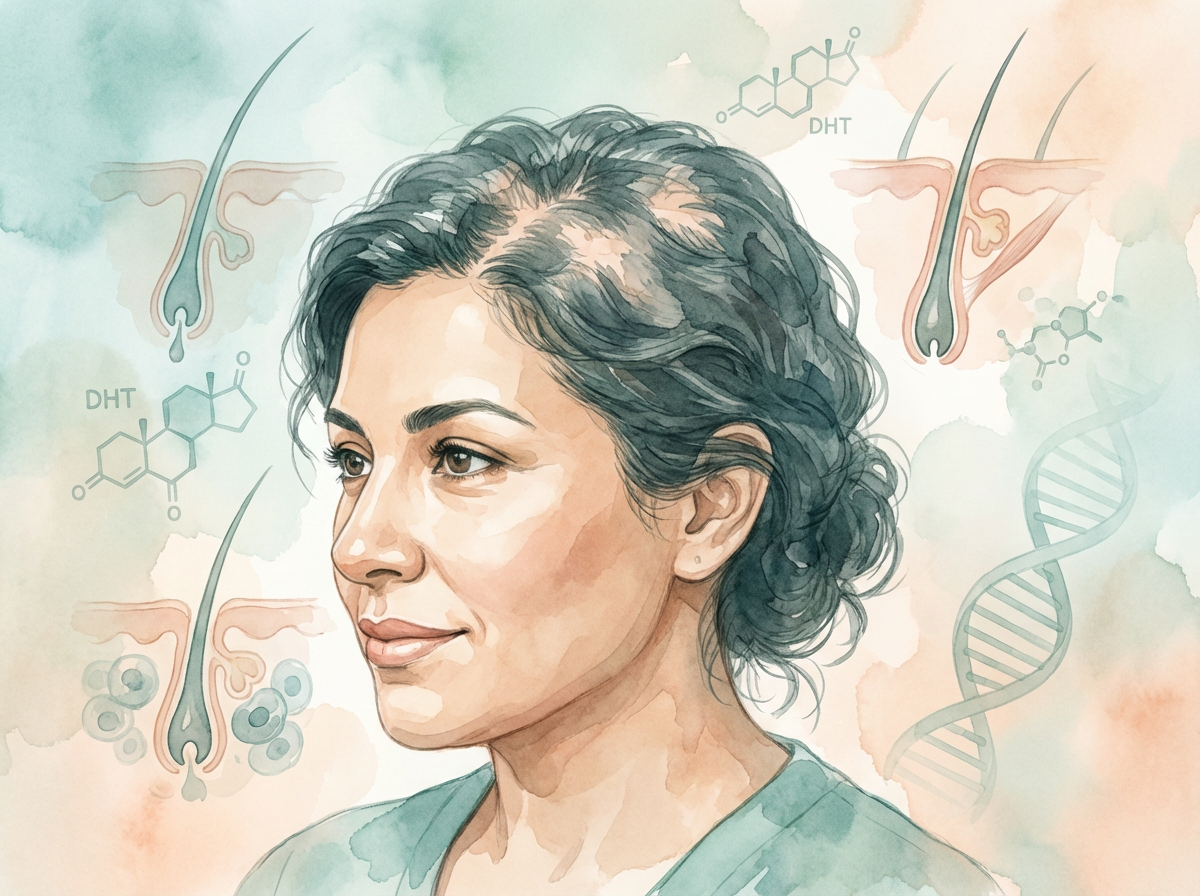
Alopecia is the medical term for hair loss. It encompasses a wide range of conditions that cause partial or complete loss of hair from the scalp or body. Hair loss can be temporary or permanent, localized or diffuse, and may result from autoimmune, genetic, hormonal, or environmental factors.
While hair loss affects both men and women, the patterns, causes, and progression vary significantly. Women are more likely to experience diffuse thinning, while men typically see recession at the temples and crown. Regardless of the pattern, hair loss can have a profound impact on self-esteem and quality of life.
At DESSNA, we approach alopecia as the complex medical condition it is – because effective treatment starts with accurate diagnosis, understanding the underlying cause, and building a personalized regrowth plan.
Common types of alopecia
Alopecia Areata
An autoimmune condition causing sudden, patchy hair loss on the scalp or body. Hair typically falls out in smooth, round patches. Can progress to total scalp (alopecia totalis) or body hair loss (alopecia universalis).
Androgenetic Alopecia
The most common form of hair loss, also known as male or female pattern baldness. Caused by genetic and hormonal factors, leading to gradual thinning and recession over time.
Telogen Effluvium
Temporary, diffuse hair shedding triggered by stress, illness, hormonal changes, or nutritional deficiencies. Hair follicles prematurely enter the resting phase, causing noticeable thinning.
Traction Alopecia
Hair loss caused by prolonged tension or pulling on hair from tight hairstyles, braids, extensions, or chemical treatments. Most common along the hairline and temples.
Why Alopecia Happens
Hair loss is multifactorial. Understanding the specific cause – whether autoimmune, genetic, hormonal, or environmental – is essential to building an effective treatment plan.
Autoimmune Attack
In alopecia areata, the immune system mistakenly attacks hair follicles, causing inflammation and hair loss. This autoimmune response can be triggered by genetic predisposition, stress, or environmental factors.
Genetics & Hormones
Androgenetic alopecia is driven by genetic sensitivity to dihydrotestosterone (DHT), a hormone that miniaturizes hair follicles over time. Family history is the strongest predictor of pattern hair loss.
Stress & Illness
Physical or emotional stress, surgery, illness, or significant weight loss can push hair follicles into the shedding phase prematurely, resulting in telogen effluvium – a temporary but noticeable increase in hair loss.
Traction & Trauma
Repeated tension from tight hairstyles, chemical treatments, or heat styling can damage hair follicles and lead to permanent hair loss if not addressed early. This is particularly common along the hairline.
How We Treat Alopecia at DESSNA
We focus on three things: identifying the root cause, promoting hair regrowth, and supporting your confidence throughout the process.
Comprehensive Hair Loss Evaluation
Your dermatologist evaluates your hair loss pattern, scalp health, medical history, and potential triggers. We may perform a scalp examination, pull test, or biopsy to determine the type and cause of your alopecia – because accurate diagnosis is the foundation of effective treatment.
Personalized Regrowth Plan
Based on your diagnosis, we build a targeted plan that may include topical treatments, oral medications, injections, PRP therapy, or emerging JAK inhibitors. Every recommendation is evidence-based and tailored to your specific type of hair loss, goals, and lifestyle.
Monitoring & Long-Term Management
Hair regrowth takes time and consistency. We design a long-term management strategy to promote new growth, maintain results, and prevent further loss – so your progress continues and your confidence is restored.
Alopecia Treatments at DESSNA
We offer a full range of evidence-based therapies to promote hair regrowth and prevent further loss – tailored to your specific type of alopecia.
Topical Minoxidil
FDA-approved topical solution that prolongs the growth phase of hair follicles and stimulates regrowth. Effective for androgenetic alopecia and some cases of alopecia areata.
Corticosteroid Injections
Intralesional corticosteroid injections directly into areas of hair loss to suppress the autoimmune response. Often the first-line treatment for localized alopecia areata.
Oral Medications
Finasteride (for men) and spironolactone (for women) reduce DHT levels or block androgen receptors, slowing hair loss and promoting regrowth in androgenetic alopecia.
JAK Inhibitors
Emerging oral medications (e.g., baricitinib) that modulate the immune system and have shown significant regrowth in severe alopecia areata. FDA-approved for extensive cases.
Platelet-Rich Plasma (PRP)
Concentrated growth factors from your own blood are injected into the scalp to stimulate hair follicle activity and promote regrowth. Effective for androgenetic alopecia and some autoimmune cases.
Topical Immunotherapy
Contact sensitizers (e.g., DPCP) applied to the scalp to redirect the immune response and stimulate hair regrowth in alopecia areata. Reserved for extensive or resistant cases.
Treatment selection depends on the type and severity of your hair loss, your medical history, and your goals. Your dermatologist will recommend the most appropriate options during your consultation.
The Treatment Window
Hair loss treatment is most effective when initiated early. The longer hair follicles remain inactive or miniaturized, the more difficult regrowth becomes. Early intervention maximizes your chances of restoring hair density.
Hair loss within the past 1–2 years responds best to treatment
Follicles that are thinning but not completely dormant have higher regrowth potential
Early treatment can stabilize hair loss and prevent further thinning
Multiple treatments work best when follicles are still viable
Why Early Treatment Matters
Progressive Hair Loss
Without intervention, most forms of alopecia progress over time. Androgenetic alopecia leads to gradual miniaturization of follicles, while alopecia areata can spread to larger areas or become chronic. Early treatment can halt or slow this progression.
Psychological & Quality of Life Impact
Research consistently shows that hair loss significantly affects self-esteem, social interactions, and mental health. Studies report higher rates of anxiety and depression among individuals with alopecia. Addressing hair loss early – both medically and emotionally – is essential to comprehensive care.
Follicle Viability
Hair follicles that have been dormant for years are less likely to respond to treatment. Once follicles are completely miniaturized or scarred, regrowth becomes significantly more difficult. Early intervention preserves follicle health and maximizes treatment success.
The earlier alopecia is treated, the better the response to therapy. Recent hair loss and active follicles respond most favorably – and we'll help you choose the right approach for your specific condition.
What Our Patients Say
“Doctor Edward Chen is the BEST! He's very professional, very caring, he will always give you his honest advice. He helped my son who had acne issues – his skin now looks great like never before.”
“Dr. Candace Green has a very warm bedside manner and makes you feel very comfortable! Great office, staff, and overall experience.”
“The office is well run and Dr. Green is thorough.”
Alopecia FAQs
Answers to the most common questions about hair loss and treatment.
Ready to Address Your Hair Loss?
Schedule a consultation with our board-certified dermatologists in Marietta and East Cobb. We'll evaluate your hair loss, identify the cause, and build a personalized treatment plan to restore your confidence.
Serving Marietta, East Cobb, and North Atlanta with expert alopecia care.
Related Conditions & Services
Explore other hair and scalp conditions we treat at our Marietta practice