
Nail Fungus Treatment in
Marietta & East Cobb
Board-certified dermatology care for onychomycosis and fungal nail infections – accurate diagnosis, effective oral and topical therapies, and strategies to prevent recurrence.
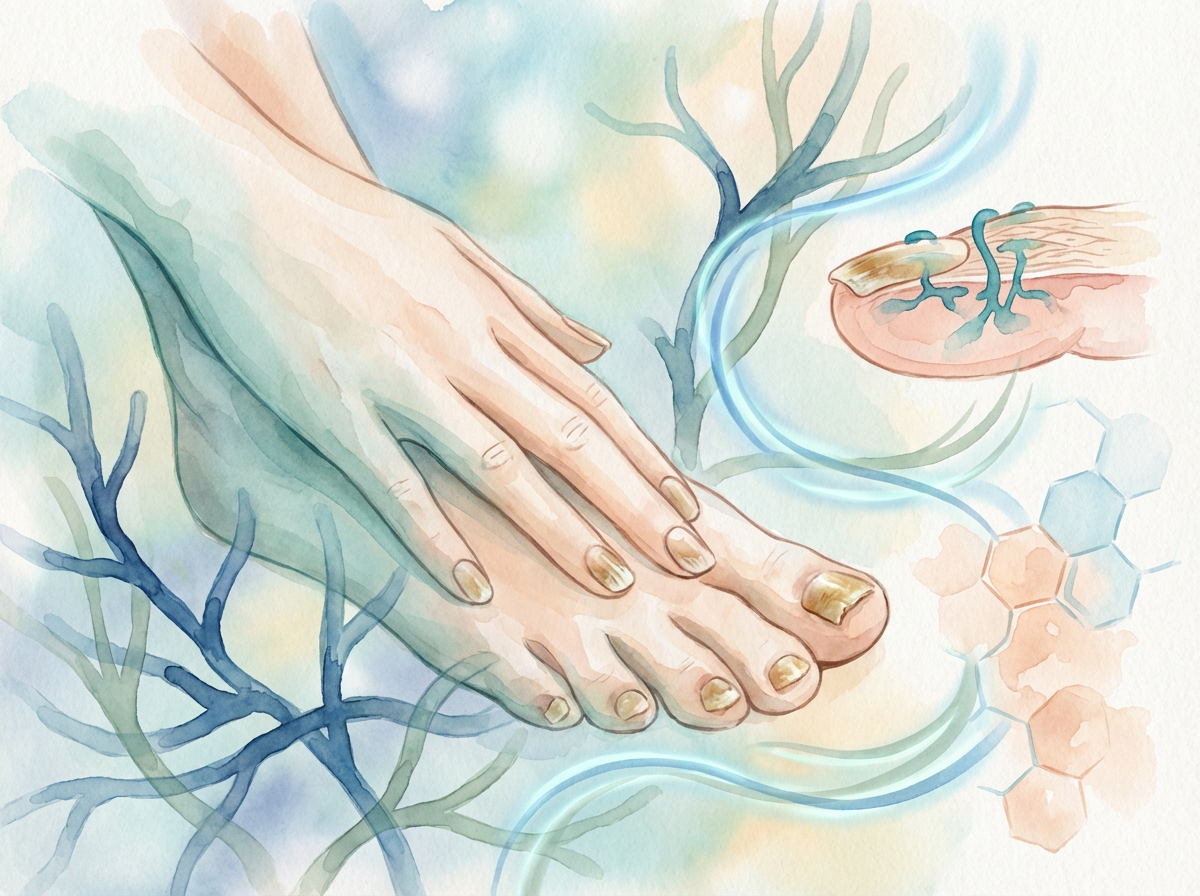
What Is Nail Fungus?
Nail fungus (onychomycosis) is a common fungal infection that affects the fingernails or toenails, causing them to become thickened, discolored, brittle, and sometimes painful. It accounts for approximately 50% of all nail disorders and affects an estimated 10% of the general population – with prevalence increasing significantly with age.
The infection typically begins as a small white or yellow spot under the tip of the nail and gradually spreads deeper, causing the nail to thicken, crumble, and separate from the nail bed. Without treatment, nail fungus rarely resolves on its own and can spread to other nails, the surrounding skin, and even to other people.
At DESSNA, we confirm the diagnosis with laboratory testing before starting treatment – because not all nail changes are fungal. Accurate diagnosis prevents months of unnecessary treatment and ensures you receive the most effective therapy for your specific infection.
Types of nail fungus we treat
Distal Subungual Onychomycosis (DSO)
The most common type, starting at the tip of the nail and spreading toward the cuticle. Causes yellowing, thickening, and crumbling of the nail edge. Usually caused by dermatophyte fungi (Trichophyton rubrum).
Proximal Subungual Onychomycosis (PSO)
Begins at the base of the nail near the cuticle and spreads outward. Less common but can indicate immunosuppression. Causes white or yellow discoloration near the nail fold.
White Superficial Onychomycosis (WSO)
Affects the top surface of the nail, creating white, chalky, powdery patches. More common on toenails. Easier to treat than deeper forms because the infection remains superficial.
Candidal Onychomycosis
Caused by Candida yeast rather than dermatophytes. More common in fingernails and in patients with chronic moisture exposure. Often involves the nail fold (paronychia) alongside the nail plate.
Why Nail Fungus Develops
Nail fungus is not a hygiene issue. It results from fungal organisms exploiting vulnerabilities in the nail barrier. Understanding risk factors helps guide both treatment and prevention.
Dermatophyte Fungi
Trichophyton rubrum and Trichophyton mentagrophytes are the most common culprits. These fungi thrive in warm, moist environments and feed on keratin – the protein that makes up nails, skin, and hair.
Warm, Moist Environments
Sweaty shoes, public pools, locker rooms, and shared showers create ideal conditions for fungal growth and transmission. Prolonged moisture exposure softens nails and allows fungi to penetrate.
Nail Damage & Age
Trauma to the nail (stubbing, tight shoes, repetitive pressure) creates entry points for fungi. Risk increases with age as nails grow more slowly, thicken, and become more susceptible to infection.
Compromised Immunity & Circulation
Diabetes, peripheral vascular disease, immunosuppression, and athlete's foot significantly increase nail fungus risk. Poor circulation reduces the body's ability to detect and fight nail infections.
How We Treat Nail Fungus at Our Marietta Practice
We confirm the diagnosis before treating, select the most effective therapy for your specific infection, and build a prevention plan so your nails stay clear.
Laboratory-Confirmed Diagnosis
Your dermatologist examines the affected nails and collects a nail clipping or scraping for laboratory analysis (KOH preparation, fungal culture, or PAS staining). This confirms the presence of fungus and identifies the specific organism – because up to 50% of abnormal-looking nails are NOT fungal, and treating a non-fungal condition with antifungals wastes months of time.
Targeted Treatment Protocol
Based on the type of fungus, severity of infection, number of nails involved, and your medical history, we select the most effective treatment approach. Options include oral antifungals (terbinafine, itraconazole), topical antifungals (efinaconazole, tavaborole), or combination therapy for resistant cases.
Monitoring & Recurrence Prevention
Nail fungus treatment requires patience – nails grow slowly, and full clearing can take 6 – 12 months. We monitor your progress, check for side effects with oral medications, and build a prevention plan including nail hygiene, shoe care, and environmental strategies to reduce reinfection risk.
Nail Fungus Treatment Options at Our Marietta Practice
Your treatment is selected based on the type of fungus, severity of infection, number of nails involved, and your medical history. Here are the tools we use to restore clear, healthy nails.
Oral Terbinafine
The most effective oral antifungal for toenail onychomycosis, with cure rates of 70 – 80%. Taken daily for 6 weeks (fingernails) or 12 weeks (toenails). Requires baseline and periodic liver function monitoring. Full nail clearing takes 6 – 12 months as the healthy nail grows out.
Oral Itraconazole
Effective against dermatophytes and Candida. Can be given as continuous daily therapy or pulse therapy (one week per month for 2 – 3 months). Preferred for Candida nail infections and patients who cannot take terbinafine.
Topical Efinaconazole (Jublia)
A prescription topical antifungal solution applied daily to affected nails. Penetrates the nail plate to reach the infection. Best for mild to moderate cases or as adjunctive therapy alongside oral medications for enhanced effectiveness.
Topical Tavaborole (Kerydin)
A boron-based topical antifungal with excellent nail penetration. Applied daily for 48 weeks. Effective for white superficial onychomycosis and mild distal subungual infections. Well-tolerated with minimal systemic absorption.
Laser Treatment
Laser energy heats the nail bed to inhibit fungal growth. Can be used as a standalone treatment for patients who cannot take oral medications or as an adjunct to improve cure rates. Multiple sessions typically required.
Nail Debridement & Prevention
Professional trimming and thinning of thickened nails improves comfort and enhances topical medication penetration. Combined with a comprehensive prevention plan including antifungal shoe sprays, moisture management, and nail hygiene protocols.
Why Diagnosis Before Treatment Matters
Not all nail changes are fungal. These conditions can mimic nail fungus and require different treatment:
Pitting, ridging, and oil-drop discoloration
Repetitive injury from shoes or sports
Thinning, ridging, and nail loss
Dark streaks requiring biopsy to rule out melanoma
Systemic condition causing slow, thick nails
Why Professional Evaluation Is Essential
Nail Fungus vs. Nail Psoriasis
Nail psoriasis can cause pitting, thickening, and discoloration that closely mimics fungal infection. However, treatment is completely different – antifungals won't help psoriasis, and immunosuppressive psoriasis treatments can worsen a fungal infection. Laboratory testing distinguishes the two.
The Importance of Fungal Culture
Studies show that up to 50% of dystrophic nails are NOT caused by fungus. Starting oral antifungal medication without confirming the diagnosis exposes patients to unnecessary medication, potential side effects, and months of ineffective treatment. We always confirm before we treat.
If you have thickened, discolored, or crumbling nails, a dermatologist evaluation with laboratory testing is the safest and most efficient first step – saving you months of guesswork.
What Our Patients Say
“Doctor Edward Chen is the BEST! He's very professional, very caring, he will always give you his honest advice. He helped my son who had acne issues – his skin now looks great like never before.”
“Dr. Candace Green has a very warm bedside manner and makes you feel very comfortable! Great office, staff, and overall experience.”
“The office is well run and Dr. Green is thorough.”
Nail Fungus Treatment FAQs
Answers to the questions our Marietta and East Cobb patients ask most about nail fungus care.
Oral antifungal treatment typically lasts 6 weeks for fingernails and 12 weeks for toenails. However, because nails grow slowly, it takes 6 – 9 months for a new, clear fingernail to fully grow in and 9 – 12 months for toenails. Patience is essential – the medication works during the treatment period, but visible clearing happens gradually as the healthy nail replaces the infected one.
Embarrassed by Thick, Discolored Nails in Marietta or East Cobb?
Your first step is a nail evaluation with one of our board-certified dermatologists. We'll confirm whether it's truly fungal, identify the specific organism, and build a treatment plan designed to restore clear, healthy nails.
Lab-confirmed diagnosis ensures you get the right treatment from day one.
Related Conditions & Services
Explore other nail and fungal conditions we treat at our Marietta practice