Periorificial Dermatitis Treatment in
Marietta & East Cobb
Board-certified dermatology care for periorificial dermatitis – targeted therapy to clear perioral, perinasal, and periocular rashes and prevent recurrence.
What Is Periorificial Dermatitis?
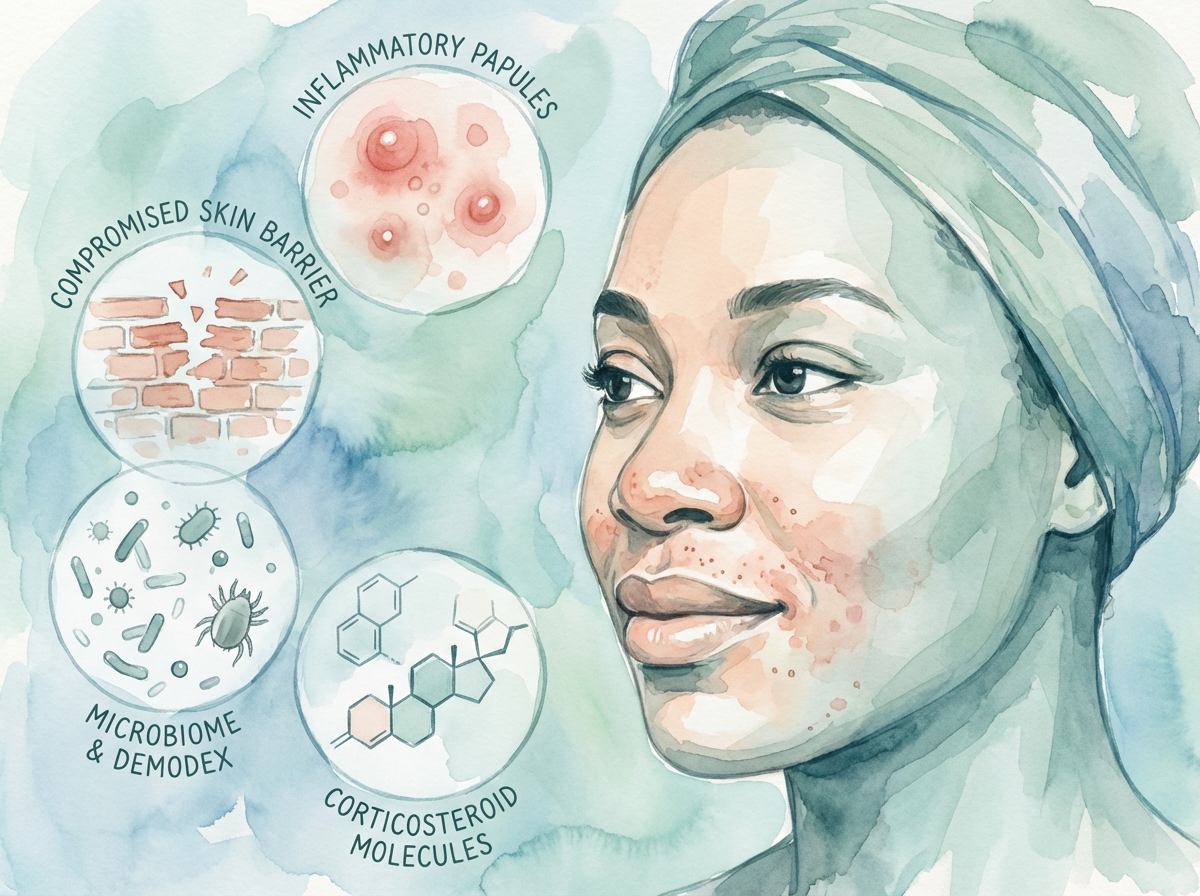
Periorificial dermatitis (also called perioral dermatitis when limited to the mouth area) is an inflammatory facial skin condition characterized by clusters of small red papules, pustules, and fine scaling around the mouth, nose, and sometimes the eyes. It predominantly affects women between the ages of 20 and 45, though it can occur in men and children as well.
The condition is frequently triggered or worsened by topical corticosteroids, heavy facial creams, fluorinated toothpaste, and certain cosmetic products. One of the most frustrating aspects of periorificial dermatitis is the "steroid rebound" cycle – patients apply topical steroids for temporary relief, but the rash returns worse each time the steroid is discontinued.
At DESSNA, our board-certified dermatologists accurately distinguish periorificial dermatitis from conditions that mimic it – including rosacea, acne, eczema, and contact dermatitis – and develop a treatment plan that breaks the cycle and achieves lasting clearance.
Forms of periorificial dermatitis we treat
Perioral Dermatitis
The most common form, presenting as small papules and pustules around the mouth and chin. Often mistaken for acne or eczema. Characteristically spares a narrow zone immediately adjacent to the vermilion border of the lips.
Perinasal Dermatitis
Affects the skin around the nostrils and nasolabial folds. May occur alone or alongside perioral involvement. Can cause significant discomfort due to the sensitive skin in this area.
Periocular Dermatitis
Involves the skin around the eyes, including the eyelids. Requires careful treatment due to the delicate periorbital skin. Can be triggered by inhaled corticosteroids, nasal sprays, or ophthalmic steroid preparations.
Granulomatous Periorificial Dermatitis
A variant more common in children, characterized by flesh-colored to yellowish-brown papules. Histologically shows granulomatous inflammation. Generally self-limiting but may take months to resolve without treatment.
Why Periorificial Dermatitis Develops
The exact cause of periorificial dermatitis is not fully understood, but several well-documented triggers and contributing factors have been identified. Understanding these helps guide both treatment and prevention.
Topical Corticosteroids
The most well-established trigger. Prolonged use of topical steroids on the face – even low-potency formulations – disrupts the skin barrier, alters the local microbiome, and creates a dependency cycle where the rash worsens each time steroids are withdrawn.
Heavy Cosmetics & Skincare
Occlusive moisturizers, heavy foundations, and comedogenic products can trap moisture and irritants against the skin. Products containing petrolatum, paraffin, or isopropyl myristate are common culprits.
Fluorinated Toothpaste
Sodium lauryl sulfate and fluoride in toothpaste can irritate the perioral skin, triggering or worsening the condition. Switching to a non-fluorinated, SLS-free toothpaste often helps.
Inhaled & Nasal Steroids
Corticosteroid inhalers for asthma and nasal steroid sprays can deposit steroid residue on the perioral and perinasal skin, triggering periorificial dermatitis in susceptible individuals.
Hormonal Factors
The strong female predominance suggests hormonal influence. Some patients notice flares related to their menstrual cycle, oral contraceptive use, or hormonal changes.
Microbiome Disruption
Emerging research suggests that disruption of the facial skin microbiome – including overgrowth of Demodex mites, Candida species, or fusiform bacteria – may play a role in the inflammatory process.
How We Treat Periorificial Dermatitis at Our Marietta Practice
A systematic, evidence-based approach that addresses the root cause – not just the symptoms – for lasting clearance.
Comprehensive Evaluation
Your dermatologist performs a thorough clinical examination of the rash distribution, morphology, and history. We review your skincare routine, medications (including topical steroids, inhalers, and nasal sprays), and potential triggers. In some cases, a skin biopsy may be performed to rule out conditions that mimic periorificial dermatitis.
Trigger Elimination
The cornerstone of treatment is identifying and eliminating triggers. This includes a supervised taper off topical corticosteroids (if applicable), switching to non-fluorinated toothpaste, simplifying your skincare routine, and avoiding occlusive cosmetics. We guide you through this process carefully to minimize the expected initial flare.
Targeted Treatment Protocol
Based on severity and distribution, we prescribe a combination of topical and/or oral therapies. Mild cases may respond to topical antibiotics or anti-inflammatory agents alone, while moderate-to-severe cases often benefit from a course of oral antibiotics. We tailor the regimen to your specific presentation and adjust as you respond.
Periorificial Dermatitis Treatments Available in Marietta
Your dermatologist selects from proven therapies based on severity, distribution, and your individual needs.
Topical Metronidazole
An anti-inflammatory and antimicrobial gel or cream applied directly to affected areas. Effective for mild-to-moderate cases with minimal side effects. Typically used for 8 to 12 weeks.
Topical Azelaic Acid
Reduces inflammation and normalizes skin cell turnover. Well-tolerated alternative or adjunct to metronidazole. Available in gel and cream formulations with anti-inflammatory and mild antimicrobial properties.
Topical Calcineurin Inhibitors
Tacrolimus or pimecrolimus provide anti-inflammatory effects without the risks of topical steroids. Particularly useful for periocular involvement where other topicals may cause irritation.
Oral Tetracyclines
Doxycycline or minocycline at anti-inflammatory doses are the gold standard for moderate-to-severe cases. Their anti-inflammatory properties (beyond antibiotic effects) help resolve the condition. Typically prescribed for 6 to 12 weeks with gradual taper.
Oral Erythromycin
An effective alternative for patients who cannot take tetracyclines – including pregnant women and children. Provides similar anti-inflammatory benefits with a well-established safety profile.
Zero Therapy
Complete discontinuation of all topical products – steroids, moisturizers, cosmetics, and sunscreens – to allow the skin barrier to reset. Expect an initial flare lasting 1 to 3 weeks before improvement begins. Often combined with gentle cleansing only.
The Steroid Rebound Cycle
The most critical challenge in periorificial dermatitis is breaking the topical steroid dependency. When steroids are discontinued, the rash typically flares significantly for 1 to 3 weeks before beginning to improve.
Expected temporary worsening when stopping steroids
Minimize discomfort during the transition period
Understanding the process prevents premature restart
Supervised reduction to break the dependency cycle
What Marietta Patients Should Know
Misdiagnosis Risks
Periorificial dermatitis is frequently misdiagnosed as acne, rosacea, eczema, or contact dermatitis. Each requires different treatment – and some treatments (particularly topical steroids prescribed for eczema) can actually cause or worsen periorificial dermatitis. Accurate diagnosis by a board-certified dermatologist is essential.
Recurrence Prevention
Even after successful treatment, periorificial dermatitis can recur if triggers are reintroduced. Long-term prevention requires ongoing attention to skincare products, avoidance of topical steroids on the face, and sometimes maintenance therapy with low-dose topical agents.
Because periorificial dermatitis affects the most visible area of the face – around the mouth, nose, and eyes – it can significantly impact self-confidence. We prioritize treatments that achieve visible improvement as quickly as possible while preventing recurrence.
What Our Patients Say
“Doctor Edward Chen is the BEST! He's very professional, very caring, he will always give you his honest advice. He helped my son who had acne issues – his skin now looks great like never before.”
“Dr. Candace Green has a very warm bedside manner and makes you feel very comfortable! Great office, staff, and overall experience.”
“The office is well run and Dr. Green is thorough.”
Periorificial Dermatitis FAQ
Perioral dermatitis is a subtype of periorificial dermatitis that specifically affects the area around the mouth. Periorificial dermatitis is the broader term that includes perioral (around the mouth), perinasal (around the nose), and periocular (around the eyes) involvement. Many patients have more than one area affected simultaneously.
Ready to Break the Cycle of Periorificial Dermatitis in Marietta or East Cobb?
Our board-certified dermatologists specialize in accurately diagnosing and effectively treating periorificial dermatitis – including steroid-induced cases that have been resistant to other treatments.
Most patients achieve significant improvement within 4 – 8 weeks of starting treatment.
Related Conditions & Services
Explore other facial dermatitis conditions we treat at our Marietta practice