Electrodessication & Curettage in
Marietta & East Cobb
Board-certified surgical dermatology care for the removal of precancerous lesions, superficial skin cancers, and benign growths – with precise technique, minimal downtime, and excellent cosmetic outcomes.
What Is Electrodessication & Curettage (ED&C)?
Electrodessication and curettage (ED&C) is a two-step surgical procedure used to remove superficial skin lesions – including precancerous growths (actinic keratoses), superficial skin cancers (basal cell and squamous cell carcinomas), and certain benign growths. It is one of the most commonly performed procedures in dermatology.
The procedure combines physical scraping (curettage) with controlled electrical current (electrodessication) to remove abnormal tissue while preserving surrounding healthy skin. It is performed in-office under local anesthesia and typically takes 15 – 30 minutes.
At DESSNA, ED&C is performed by board-certified dermatologists who use this technique when it offers the best balance of complete lesion removal, cosmetic outcome, and patient convenience – particularly for lesions on the trunk, arms, and legs.
How the procedure works
Curettage
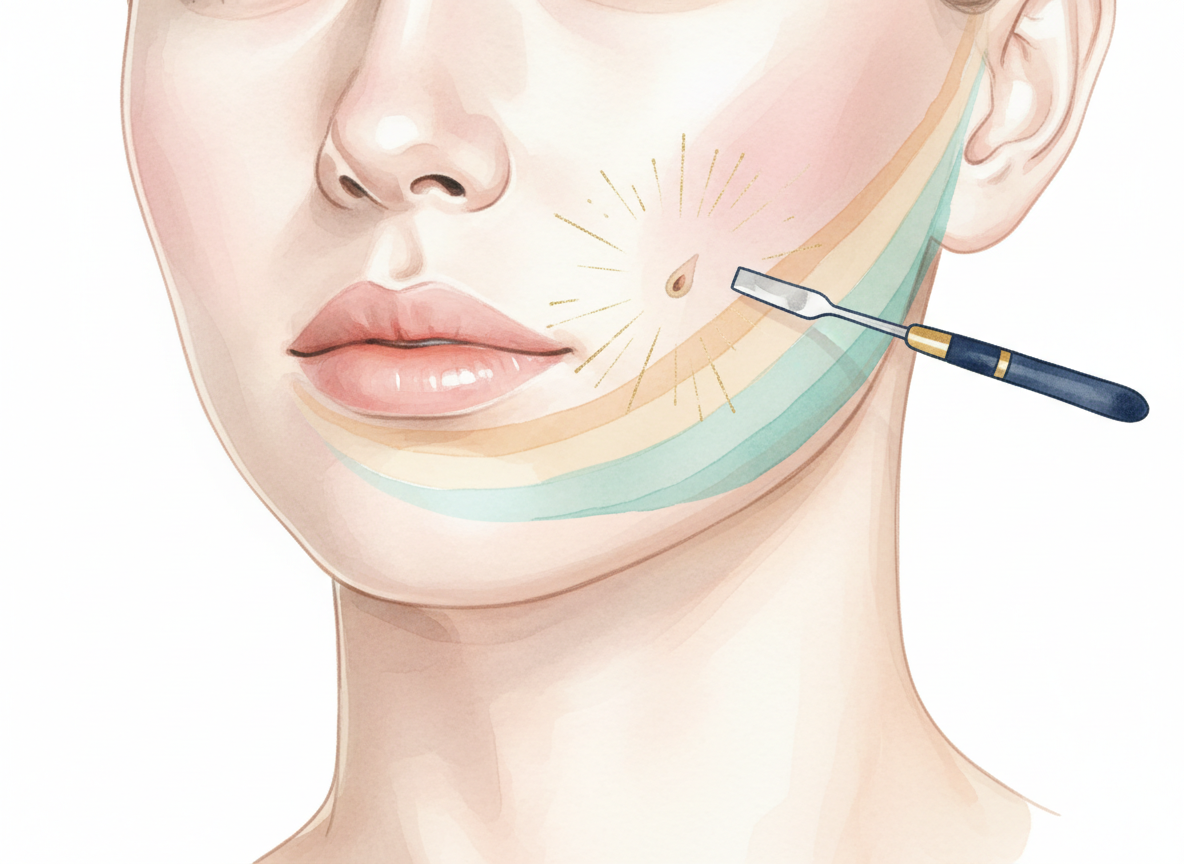
A sharp, spoon-shaped instrument (curette) is used to scrape away abnormal tissue from the skin surface. The curette allows the dermatologist to feel the difference between soft, abnormal tissue and the firmer, healthy tissue beneath – ensuring thorough removal.
Electrodessication
After curettage, a fine electrical needle is applied to the treatment area to destroy any remaining abnormal cells and cauterize blood vessels. This step seals the wound, controls bleeding, and creates a margin of treated tissue around the original lesion.
Repeat Cycles
The curettage and electrodessication steps are typically repeated 2 – 3 times in the same session. Each cycle removes additional abnormal tissue and extends the treatment margin, significantly reducing the risk of recurrence.
Healing by Secondary Intention
The treated area is left to heal naturally from the bottom up (secondary intention healing). A scab forms, and new skin gradually fills in over 2 – 6 weeks depending on the size and location. This approach often produces excellent cosmetic results.
When Is ED&C the Right Choice?
ED&C is most effective for superficial lesions where the abnormal tissue can be clearly distinguished from healthy tissue by feel. Your dermatologist selects this technique when it offers the best combination of thoroughness, cosmetic outcome, and convenience.
Actinic Keratoses (Precancerous)
Rough, scaly patches caused by years of cumulative UV damage. Left untreated, a small percentage can progress to squamous cell carcinoma. ED&C provides definitive removal with tissue destruction to prevent progression.
Superficial Skin Cancers
Low-risk basal cell carcinomas and superficial squamous cell carcinomas on the trunk and extremities are excellent candidates for ED&C. The procedure achieves cure rates of 92 – 97% for appropriately selected lesions.
Benign Growths & Warts
Seborrheic keratoses, pyogenic granulomas, and treatment-resistant warts can be effectively removed with ED&C when other methods have been insufficient or when the growth is causing symptoms.
Skin Tags & Dermatofibromas
Larger or symptomatic benign growths that are difficult to remove with simpler methods may benefit from the precision and thoroughness of the ED&C technique.
How We Perform ED&C at DESSNA
We combine surgical precision with patient comfort – removing abnormal tissue thoroughly while minimizing scarring and ensuring a smooth recovery.
Pre-Procedure Evaluation
Your dermatologist evaluates the lesion's size, depth, location, and clinical characteristics to confirm ED&C is the appropriate treatment. We assess whether the lesion is superficial enough for this technique and discuss expected outcomes, healing timeline, and any alternative options.
Curettage & Electrodessication
After numbing the area with local anesthesia, the dermatologist uses a curette to scrape away abnormal tissue, then applies electrodessication to destroy residual cells and control bleeding. This cycle is repeated 2 – 3 times to ensure thorough removal and reduce recurrence risk.
Wound Care & Follow-Up
We provide detailed wound care instructions for optimal healing. The treated area forms a scab that falls off naturally over 2 – 6 weeks, revealing new skin beneath. Follow-up ensures complete healing, monitors for recurrence, and addresses any cosmetic concerns.
ED&C Treatment Options at Our Marietta Practice
The specific ED&C approach is tailored to the type of lesion, its size and location, and whether it is benign, precancerous, or cancerous. Here is how we apply this versatile technique.
Standard ED&C (2 – 3 Cycles)
The gold standard approach: curettage followed by electrodessication, repeated 2 – 3 times in a single session. Each cycle removes additional abnormal tissue and extends the treatment margin. Achieves cure rates of 92 – 97% for appropriately selected basal cell and squamous cell carcinomas.
ED&C for Actinic Keratoses
Single or multiple actinic keratoses can be treated efficiently with ED&C when they are thick, hypertrophic, or have not responded to topical therapies. Provides definitive removal with tissue destruction to prevent progression to squamous cell carcinoma.
ED&C for Benign Growths
Larger or symptomatic benign growths that are difficult to remove with cryotherapy or shave excision alone can be effectively treated with ED&C. The technique provides thorough removal with controlled hemostasis.
Pathology & Tissue Analysis
When ED&C is performed for suspected skin cancer, the curetted tissue is sent to pathology for microscopic analysis. This confirms the diagnosis, identifies the cancer type, and helps guide any additional treatment or surveillance needed.
Wound Care & Scar Optimization
Detailed wound care instructions including gentle cleansing, petroleum jelly application, and bandaging to promote optimal healing. The wound heals by secondary intention over 2 – 6 weeks, and we provide scar care guidance to minimize the final mark.
Surveillance & Prevention
Regular follow-up examinations monitor the treated site for recurrence and screen for new lesions. We build a comprehensive sun protection and skin surveillance plan to reduce future skin cancer risk and catch any new concerns early.
ED&C vs. Mohs Surgery: Which Is Right for You?
Understanding when each technique is most appropriate helps ensure you receive the best possible care for your specific lesion:
Low-risk, superficial lesions on trunk & extremities
High-risk areas (face, ears, nose) or recurrent cancers
Faster, single-visit procedure with no sutures
Real-time margin analysis for highest cure rates
92 – 97% for appropriately selected lesions
Why Professional Evaluation Matters
Lesion Selection Is Critical
ED&C is highly effective for the right lesions – but not all skin cancers are appropriate candidates. Deeper, aggressive, or recurrent skin cancers, and those on the face or other high-risk areas, typically require Mohs surgery or excisional surgery for the highest cure rates. Your dermatologist's expertise in selecting the right procedure is the most important factor in your outcome.
Biopsy Before Treatment
In most cases, a biopsy is performed before ED&C to confirm the diagnosis and ensure the lesion is appropriate for this technique. This step prevents treating an aggressive cancer with a method that may not provide adequate margins – and it gives you peace of mind that the right approach is being used.
If you have a suspicious skin lesion, a precancerous growth, or a biopsy-confirmed superficial skin cancer, a dermatologist evaluation will determine whether ED&C is the most effective treatment – or whether another approach would better serve your needs.
What Our Patients Say
“Doctor Edward Chen is the BEST! He's very professional, very caring, he will always give you his honest advice. He helped my son who had acne issues – his skin now looks great like never before.”
“Dr. Candace Green has a very warm bedside manner and makes you feel very comfortable! Great office, staff, and overall experience.”
“The office is well run and Dr. Green is thorough.”
Electrodessication & Curettage FAQs
Answers to the questions our Marietta and East Cobb patients ask most about ED&C.
No. ED&C is performed under local anesthesia, so you will not feel pain during the procedure. You may feel a brief pinch from the numbing injection, but the curettage and electrodessication themselves are painless. Most patients describe the experience as far more comfortable than they expected. Mild soreness at the treatment site for 1 – 2 days afterward is normal and manageable with over-the-counter pain relievers.
Have a Skin Lesion That Needs Evaluation in Marietta or East Cobb?
Your first step is a consultation with one of our board-certified dermatologists. We will evaluate your lesion, confirm the diagnosis, and determine whether ED&C or another approach is the most effective treatment for your specific situation.
Most ED&C procedures are completed in a single visit with minimal downtime.
Related Conditions & Services
Explore other surgical and skin lesion services we offer at our Marietta practice