
Seborrheic Keratosis Treatment in
Marietta & East Cobb
Board-certified dermatology care for seborrheic keratoses – expert evaluation, accurate diagnosis, and safe removal of these common benign skin growths.
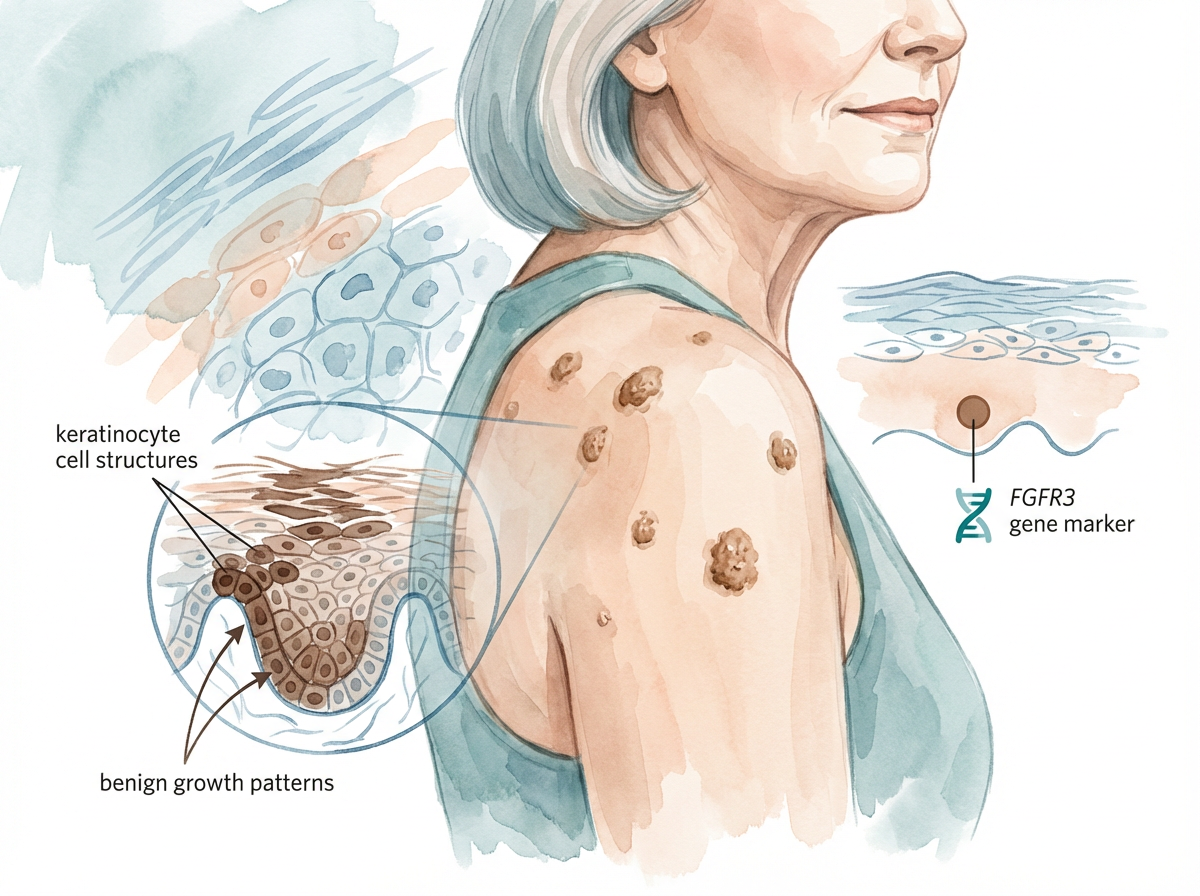
What Are Seborrheic Keratoses?
Seborrheic keratoses are common, benign skin growths that typically appear as waxy, raised, brown or tan patches with a characteristic "stuck-on" appearance. They are one of the most frequent skin growths seen in adults over 40.
While seborrheic keratoses are harmless, they can be cosmetically concerning or become irritated by clothing or jewelry. More importantly, some skin cancers can mimic their appearance. A dermatologist evaluation ensures accurate diagnosis and rules out melanoma or other concerning lesions.
At DESSNA, we provide thorough diagnostic evaluation and offer safe, effective removal options when desired – giving you peace of mind and clearer, more comfortable skin.
Types of seborrheic keratoses
Common Seborrheic Keratosis
Waxy, raised, brown or tan growths with a 'stuck-on' appearance. Most common type, typically appearing on the trunk, face, and scalp.
Stucco Keratosis
Small, white or gray, rough-textured growths usually found on the lower legs and ankles. Often appear in clusters.
Dermatosis Papulosa Nigra
Small, dark brown or black growths most common in individuals with darker skin tones. Typically appear on the face and neck.
Melanoacanthoma
A pigmented variant of seborrheic keratosis that can appear very dark. Professional evaluation is essential to distinguish from melanoma.
Why Seborrheic Keratoses Develop
Seborrheic keratoses are benign growths resulting from the accumulation of normal skin cells. Understanding the contributing factors helps with accurate diagnosis and treatment planning.
Aging & Cell Growth
Seborrheic keratoses result from the overgrowth of normal skin cells (keratinocytes). They become more common with age, typically appearing after age 40 and increasing in number over time.
Genetic Predisposition
Family history plays a significant role. If your parents or siblings have seborrheic keratoses, you're more likely to develop them. Certain genetic mutations have been identified in these growths.
Sun Exposure History
While not directly caused by UV radiation like age spots, sun exposure may contribute to their development. They often appear on sun-exposed areas, though they can occur anywhere on the body.
Skin Type & Ethnicity
Seborrheic keratoses can affect all skin types and ethnicities. Dermatosis papulosa nigra, a variant, is particularly common in individuals with darker skin tones.
How We Treat Seborrheic Keratosis at DESSNA
We provide accurate diagnosis and precise removal using the most appropriate method for your keratosis, ensuring minimal scarring and fast healing.
Accurate Diagnosis
We examine the growth carefully to confirm it's a seborrheic keratosis and not a concerning skin lesion. Proper diagnosis ensures we use the right removal method and that nothing suspicious is missed.
Precise Removal
We use cryotherapy, curettage, or laser removal depending on the size, location, and depth of the keratosis. Each method is quick, minimally invasive, and leaves minimal scarring.
Healing & Prevention
After removal, we provide aftercare instructions to ensure proper healing and minimize infection risk. While seborrheic keratoses can recur, proper removal and sun protection reduce the likelihood.
Seborrheic Keratosis Treatment Options at Our Marietta Practice
We offer multiple removal methods tailored to your keratosis size, location, and cosmetic goals. Here are the tools we use for safe, effective removal.
Cryotherapy (Freezing)
Liquid nitrogen freezes the keratosis, causing it to blister and fall off within 1–2 weeks. Quick, effective, and requires minimal aftercare. Ideal for most seborrheic keratoses.
Curettage & Cautery
We carefully scrape away the keratosis and cauterize the base to prevent regrowth. This method is precise and leaves minimal scarring, especially on the face and neck.
Laser Removal
Laser technology precisely removes the keratosis with minimal damage to surrounding skin. Best for patients wanting the fastest healing and least visible scarring.
Pathology Review (When Needed)
If a growth looks unusual, we send it to pathology to rule out skin cancer. This ensures your safety and gives you peace of mind.
Sun Protection & Prevention
Daily SPF 30+ and protective clothing reduce the risk of new seborrheic keratoses. We recommend a comprehensive sun protection plan to prevent future growths.
Aftercare & Healing Support
We provide detailed aftercare instructions to ensure proper healing, minimize infection risk, and optimize cosmetic results. Follow-up visits monitor healing progress.
When Is a Growth More Than a Seborrheic Keratosis?
Most seborrheic keratoses are harmless. But certain features can indicate skin cancer. The ABCDEs of melanoma detection apply:
One half doesn't match the other
Irregular, ragged, or blurred edges
Multiple shades or uneven color
Larger than 6mm (pencil eraser)
Changing in size, shape, or color
Why Professional Evaluation Is Essential
Seborrheic Keratoses vs. Melanoma
Melanoma – particularly pigmented variants – can closely resemble a benign seborrheic keratosis to the untrained eye. Dermoscopic evaluation by a board-certified dermatologist reveals structural details invisible to the naked eye, enabling early detection when treatment is most effective.
Seborrheic Keratoses vs. Basal Cell Carcinoma
Basal cell carcinoma – the most common skin cancer – can sometimes appear similar to seborrheic keratoses, especially pigmented variants. Professional evaluation ensures accurate diagnosis and appropriate treatment.
If you have growths that are new, changing, bleeding, or look different from others on your skin, a dermatologist evaluation is the safest first step – and it takes just minutes.
What Our Patients Say
“Doctor Edward Chen is the BEST! He's very professional, very caring, he will always give you his honest advice. He helped my son who had acne issues – his skin now looks great like never before.”
“Dr. Candace Green has a very warm bedside manner and makes you feel very comfortable! Great office, staff, and overall experience.”
“The office is well run and Dr. Green is thorough.”
Seborrheic Keratosis Treatment FAQs
Answers to the questions our Marietta and East Cobb patients ask most about seborrheic keratosis care.
No, seborrheic keratoses are completely benign (non-cancerous) growths. However, some skin cancers – including melanoma and basal cell carcinoma – can mimic their appearance. A dermatologist evaluation with dermoscopy is the most reliable way to confirm that a growth is truly benign.
Ready for Safe, Effective Removal in Marietta or East Cobb?
Your first step is a skin evaluation with one of our board-certified dermatologists. We'll examine your growths, confirm the diagnosis, and recommend the safest, most effective removal method for your needs.
Most removal procedures are completed in a single visit with minimal downtime.
Related Conditions & Services
Explore other benign skin growths and lesions we treat at our Marietta practice