
Skin Cancer Screening & Treatment in
Marietta & East Cobb
Board-certified dermatology care for basal cell carcinoma, squamous cell carcinoma, melanoma, and precancerous lesions – with early detection strategies that save lives.
What Is Skin Cancer?
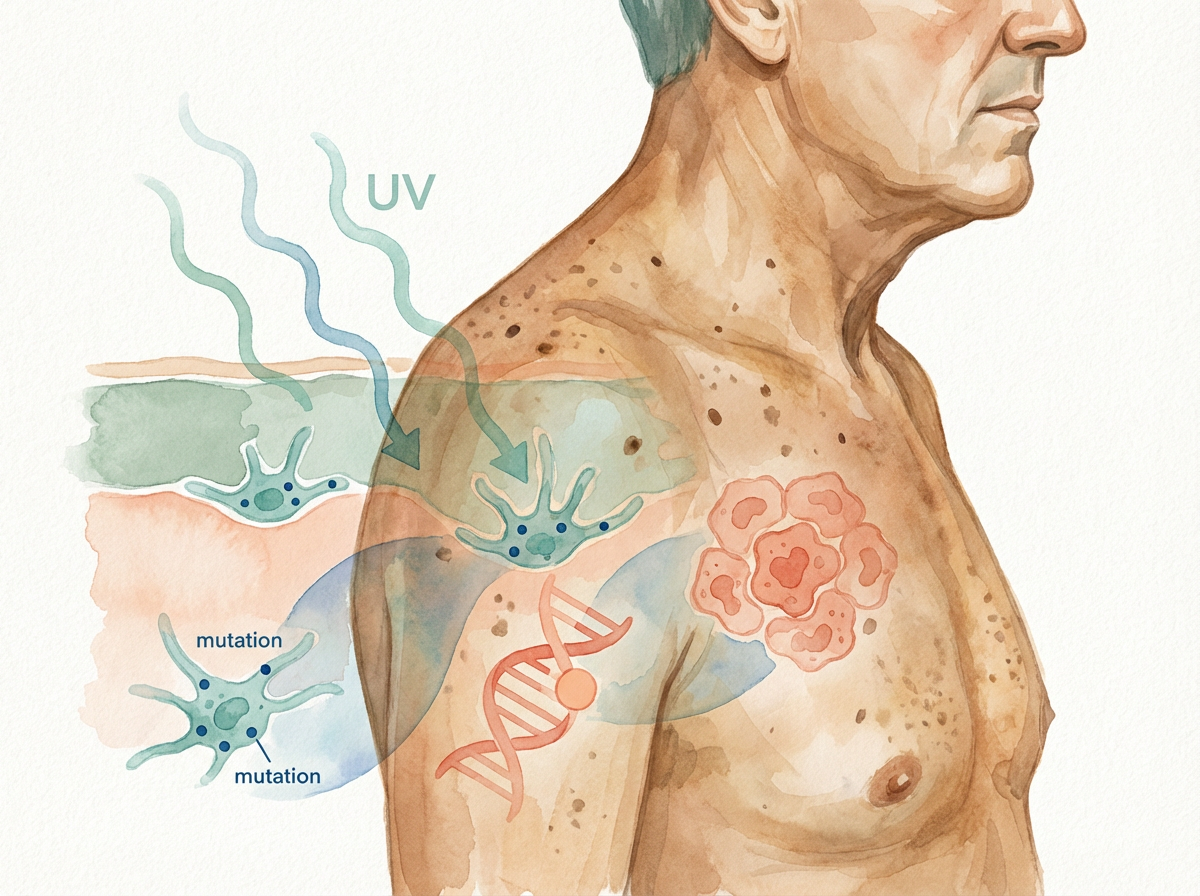
Skin cancer is the uncontrolled growth of abnormal skin cells caused by DNA damage – most often from ultraviolet (UV) radiation. It is the most common cancer in the United States, with more than 5 million cases diagnosed each year.
While skin cancer can be life-threatening – particularly melanoma – the vast majority of cases are highly treatable when caught early. That's why routine skin exams and prompt evaluation of suspicious lesions are among the most important things you can do for your long-term health.
At DESSNA, we combine thorough full-body skin exams with dermoscopy and biopsy expertise to detect skin cancer at its earliest, most treatable stage – and we guide you through every step of treatment and follow-up.
Types of skin cancer
Basal Cell Carcinoma (BCC)
The most common skin cancer. Appears as a pearly bump, flat scar-like lesion, or non-healing sore – typically on sun-exposed areas.
Squamous Cell Carcinoma (SCC)
The second most common type. Presents as a firm red nodule, scaly patch, or crusted sore – with potential to spread if untreated.
Melanoma
The most serious form of skin cancer. Develops in melanocytes and can appear as a new dark spot or a change in an existing mole.
Precancerous Lesions (Actinic Keratoses)
Rough, scaly patches caused by years of sun exposure. Left untreated, a small percentage can progress to squamous cell carcinoma.
Why Skin Cancer Develops
Skin cancer results from a combination of environmental exposure and individual risk factors. Understanding your personal risk profile helps us build a screening and prevention plan tailored to you.
UV Radiation & Sun Exposure
Cumulative UV damage from sunlight and tanning beds is the leading cause of skin cancer. UV rays damage the DNA in skin cells, triggering mutations that can lead to uncontrolled cell growth over time.
Genetics & Family History
A family history of melanoma or other skin cancers increases your risk. Certain inherited gene mutations – including CDKN2A and BRAF – can make skin cells more vulnerable to UV-induced damage.
Skin Type & Mole Count
Fair skin, light eyes, freckling tendency, and a high number of moles (50+) all increase risk. However, skin cancer can develop in any skin type – including darker skin tones where it's often diagnosed later.
Immune Suppression & Age
Weakened immune function – from organ transplant medications, autoimmune treatments, or other causes – significantly raises skin cancer risk. Age compounds the effect of cumulative sun exposure over decades.
How We Treat Skin Cancer at DESSNA
Early detection, accurate diagnosis, and complete surgical removal are the foundation of our skin cancer care. We combine expertise with compassionate support.
Comprehensive Skin Screening
We perform a thorough full-body skin exam using dermoscopy to identify suspicious lesions. Early detection is critical for skin cancer outcomes, and we use the latest diagnostic tools to catch concerns early.
Biopsy & Pathology Analysis
If a lesion looks concerning, we perform a biopsy and send it to pathology for definitive diagnosis. This tells us exactly what we're dealing with and guides treatment planning.
Surgical Removal & Reconstruction
Confirmed skin cancers are surgically removed with appropriate margins to ensure complete removal. We prioritize both safety and cosmetic outcomes, especially on visible areas.
Skin Cancer Treatment Options at Our Marietta Practice
We offer comprehensive screening, accurate diagnosis, and complete surgical removal. Early detection and proper treatment save lives.
Full-Body Skin Screening
Comprehensive dermoscopic exam identifies suspicious lesions before they become advanced. Early detection dramatically improves outcomes and treatment options.
Biopsy & Pathology
We perform a biopsy and send tissue to pathology for definitive diagnosis. This confirms skin cancer type (basal cell, squamous cell, melanoma) and guides treatment.
Surgical Excision
We surgically remove the cancer with appropriate margins to ensure complete removal. Reconstruction is performed to optimize cosmetic outcomes, especially on the face and neck.
Mohs Micrographic Surgery
This specialized technique removes cancer layer-by-layer with microscopic examination, ensuring complete removal while preserving maximum healthy tissue. Ideal for facial lesions.
Sun Protection & Prevention
Daily SPF 30+, protective clothing, and regular self-exams are critical. We provide a comprehensive sun safety plan to prevent future skin cancers.
Surveillance & Follow-Up
Regular follow-up exams monitor for recurrence and identify new lesions early. We develop a long-term surveillance plan based on your skin cancer type and risk.
The ABCDEs of Melanoma Detection
Asymmetry
One half of the mole doesn't match the other half.
Border
Edges are irregular, ragged, notched, or blurred.
Color
Color is not uniform – shades of brown, black, red, white, or blue.
Diameter
Larger than 6mm (about the size of a pencil eraser), though melanomas can be smaller.
Evolving
The mole is changing in size, shape, color, or symptoms over time.
Why Screening Matters
Melanoma Survival Rates
When detected early (Stage I), melanoma has a 5-year survival rate above 99%. When diagnosed at later stages after it has spread to lymph nodes or distant organs, that rate drops significantly. Regular screening is the single most effective way to catch melanoma early.
Non-Melanoma Skin Cancers
Basal cell and squamous cell carcinomas rarely spread to distant sites, but they can cause significant local tissue destruction if left untreated – particularly on the face, ears, and scalp. Early treatment means smaller excisions, better cosmetic outcomes, and lower risk of recurrence.
The American Academy of Dermatology recommends annual skin exams for all adults – and more frequent screening for those with a personal or family history of skin cancer, a high mole count, or a history of significant sun exposure.
What Our Patients Say
“Doctor Edward Chen is the BEST! He's very professional, very caring, he will always give you his honest advice. He helped my son who had acne issues – his skin now looks great like never before.”
“Dr. Candace Green has a very warm bedside manner and makes you feel very comfortable! Great office, staff, and overall experience.”
“The office is well run and Dr. Green is thorough.”
Skin Cancer Screening & Treatment FAQs
Answers to the questions our Marietta and East Cobb patients ask most about skin cancer care.
The American Academy of Dermatology recommends annual full-body skin exams for all adults. If you have a personal or family history of skin cancer, a high mole count, fair skin, or a history of significant sun exposure or tanning bed use, your DESSNA dermatologist may recommend more frequent screenings – typically every 3 to 6 months.
Ready to Schedule a Skin Cancer Screening in Marietta?
Your first step is a comprehensive skin exam with one of our board-certified dermatologists. We'll evaluate your skin, identify any areas of concern, and create a screening and prevention plan tailored to your risk profile.
Early detection is the most powerful tool against skin cancer.
Related Conditions & Services
Explore other skin lesion and screening services we offer at our Marietta practice